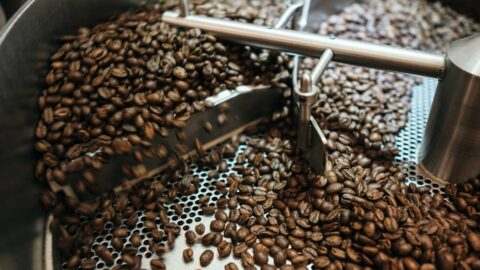
The drum spins at 120 RPM, the fan is pushing 400 liters of air per minute, and you are watching 50 grams of green beans fight for their lives against a heating element capable of roasting 5 kilograms. At minute nine, the app screams that you have hit first crack. You stop the cycle, dump the beans, and let them rest for eighteen hours. Then you pull the same protocol you use for your 300-gram batches on the Giesen or your 1kg Probat. The result is under-extracted, thin, and aggressively sour. You grind finer. You brew longer. It tastes worse. The problem isn’t your brew ratio. It isn’t your water temperature. It is the physics of roasting 50 grams in a machine designed to roast 50 grams.
Single-batch roasting on the Ikawa Home creates a fundamentally different chemical stress test than multi-batch roasting. The thermal mass of the roast is so low that heat transfer dynamics shift entirely. In a 1-kilogram roast, the beans themselves become the primary heat sink, absorbing energy and stabilizing the temperature curve. In a 50-gram roast, the beans are essentially floating in a pocket of superheated air. They do not control the roast; the machine controls them. This means the dial-in protocol for a single-batch roast must be rewritten from the ground up, focusing on heat application rather than time management.
The Thermal Mass Trap
When you roast 300 grams or more, the beans absorb a massive amount of energy before they even begin to release moisture. The temperature of the bean mass rises slowly, acting as a buffer against rapid heat application. This is why standard roasting curves prioritize a slow, steady ramp into first crack. You are managing the bean’s internal temperature, knowing it will lag behind the drum temperature by several degrees.
With 50 grams, that buffer disappears. The beans heat up almost instantly, tracking the drum temperature with terrifying accuracy. There is no lag. There is no buffer. The moment the heating element cycles on, those beans are exposed to direct radiant heat and convective airflow that would melt plastic if held for more than a few seconds. The Ikawa Home compensates by using a high-velocity fan to keep the beans moving, but the physics remain unchanged: you are roasting a microscopic amount of matter in a massive volume of air.
This creates a specific failure mode that home roasters constantly misdiagnose. They see a sour cup and assume they didn’t roast long enough. They extend the roast by 30 seconds. The result is a flat, ashy cup with zero sweetness. The beans didn’t under-roast; they over-roasted in the wrong dimension. They absorbed too much convective heat too quickly, driving off the delicate acids without allowing the Maillard reaction to build the structural sugars needed to balance them. The fix is not more time. It is less aggressive heat application at the start.
Why Standard Curves Fail at 50 Grams
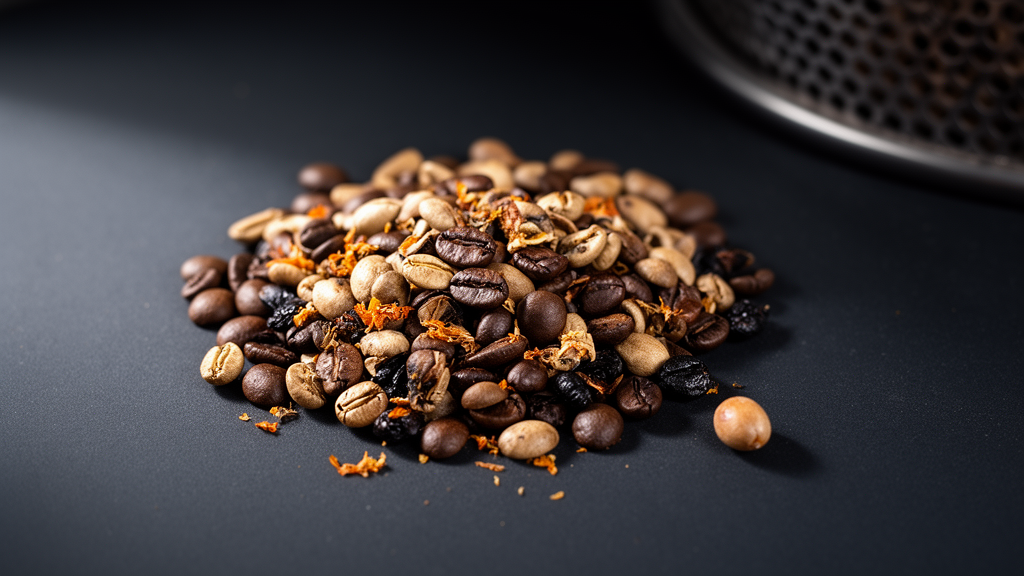
Most roasting guides recommend a specific rate of rise (RoR) for the first few minutes of the roast. For a 1-kilogram batch, a RoR of 8 to 10 degrees Celsius per minute is standard. For a 50-gram batch on the Ikawa, applying that same RoR is a recipe for disaster. The machine’s heating element is powerful relative to the bean mass. If you apply standard heat, the RoR spikes to 15 or 20 degrees per minute within the first three minutes. The beans scorch on the outside while remaining raw on the inside. This is called a ‘baked’ or ‘scorched’ bean, and it is the single most common defect in single-batch roasting.
The Ikawa Home’s software attempts to manage this with its ‘Smart Roast’ algorithm, which automatically adjusts the fan and heating element. But ‘Smart Roast’ is a blunt instrument. It reacts to temperature changes, it does not predict them. By the time the app registers a spike in bean temperature, the beans have already absorbed the excess energy. The result is a cup that tastes uneven, with distinct pockets of sourness and bitterness in the same sip.
To dial in a single-batch roast, you must abandon the concept of a ‘standard’ curve. Instead, you must focus on heat capacity. You need to apply enough heat to reach first crack, but not so much that you drive off the volatile aromatics before they can develop. This requires a slower initial ramp, often starting with the heating element at 50% power for the first two minutes, then gradually increasing it as the beans begin to release moisture. It is a counter-intuitive process. You are essentially roasting the beans with less heat than you think they need, relying on the machine’s fan to distribute the heat evenly rather than blasting them with it.
The Moisture Problem
Green coffee contains between 8% and 12% moisture, depending on the origin and processing method. In a large batch, that moisture evaporates slowly, carrying away heat and slowing the roast. In a 50-gram batch, that moisture evaporates almost instantly. The beans dry out rapidly, leaving them vulnerable to direct heat. This is why single-batch roasts often taste ‘dry’ or ‘papery’ even when they reach a dark roast color.
The solution is to manage the drying phase with extreme precision. You must keep the beans moving. The Ikawa’s fan is your primary tool here. If the fan speed is too low, the beans will clump and scorch. If it is too high, you will drive off too much moisture too quickly, leaving the beans brittle and prone to chaffing. The ideal fan speed for a 50-gram roast is higher than you would use for a 300-gram batch, but not so high that it cools the beans down. It is a delicate balance that requires experimentation.
Another factor is the bean’s origin. Lighter roasts, such as those from Ethiopia or Kenya, have a higher density and require more energy to break down their cellular structure. Heavier roasts, such as those from Brazil or Sumatra, are less dense and require less energy. When roasting 50 grams, you must adjust your heat application based on the bean’s density, not just its origin. A dense Ethiopian bean will require a slower initial ramp than a less dense Brazilian bean, even if you are roasting them to the same final color.
Dialing In the Brew
Once you have roasted your 50-gram batch, you must adjust your brewing protocol to match the unique chemical profile of single-batch coffee. Standard brew recipes assume a certain level of extraction yield, typically 18% to 22%. Single-batch roasts often fall short of this yield, even when they taste ‘dark’ on the Agtron scale. This is because the roasting process drives off the heavier, sweeter compounds before they have a chance to fully develop.
To compensate, you must grind finer. Much finer. A standard pour-over grind might be 15 clicks on a Comandante C40. For a single-batch roast, you may need to grind at 10 clicks or lower. This increases the surface area, allowing more of the soluble compounds to dissolve into the water. You must also increase the brew time. A standard 3-minute brew might extend to 4 or 5 minutes. This gives the water more time to extract the remaining compounds, balancing the sourness with sweetness.
Water temperature is another critical variable. Standard brew recipes recommend 93°C to 96°C. For single-batch roasts, you should lower the temperature to 90°C to 92°C. This reduces the risk of over-extracting the bitter compounds, allowing the sweeter, fruitier notes to shine through. It is a subtle adjustment, but it makes a significant difference in the final cup.
Finally, consider your brew ratio. Standard recipes use a 1:16 ratio (1 gram of coffee to 16 grams of water). For single-batch roasts, you may need to increase this to 1:17 or 1:18. This dilutes the cup slightly, reducing the intensity of the sourness and allowing the subtle flavors to emerge. It is a trade-off, but one that is often worth making.
The 18-Hour Rest Rule
Roasted coffee continues to degas for days after the roast is complete. Carbon dioxide escapes from the beans, slowly altering the flavor profile. For large batches, this process takes about 5 to 7 days. For single-batch roasts, the process is much faster. The beans degas rapidly, often within 24 to 48 hours. This means that a single-batch roast that tastes great on day 2 might taste flat and sour on day 5.
To manage this, you must brew single-batch roasts quickly. Do not store them for more than 3 days. If you cannot brew them within that window, store them in an airtight container at room temperature, away from light and heat. Do not refrigerate or freeze them, as this will trap moisture and alter the flavor profile. Brew them fresh, and brew them often.
Conclusion
Single-batch roasting on the Ikawa Home is not a shortcut. It is a different discipline entirely. It requires a deep understanding of heat transfer, moisture dynamics, and chemical extraction. It demands that you abandon standard roasting curves and brew recipes, and instead develop a new protocol tailored to the unique challenges of roasting 50 grams at a time. The reward is a cup of coffee that is uniquely expressive, with flavors that are often impossible to achieve in larger batches. But the path to that cup is fraught with pitfalls. If you are willing to navigate them, the Ikawa Home can be a powerful tool for exploring the full spectrum of coffee flavor.
Frequently Asked Questions
Can I use the same grind setting for single-batch and multi-batch roasts?
No. Single-batch roasts require a much finer grind to compensate for the lower extraction yield. Start by adjusting your grind 5 clicks finer than your standard setting, then taste and adjust from there.
Is it safe to roast 50 grams on a machine designed for 50 grams?
Yes, the Ikawa Home is specifically designed for 50-gram batches. However, you must monitor the roast closely, as the beans can scorch quickly if the heat application is too aggressive.
How long should I rest my single-batch roast before brewing?
Single-batch roasts degas rapidly. Brew them within 24 to 48 hours for the best flavor.
Why does my single-batch roast taste sour even when it looks dark?
This is a common issue known as ‘baked’ or ‘scorched’ beans. The fix is a slower initial ramp and lower heat application.
Sources & Further Reading
- Coffee Roasting: A Practical Guide to Developing Flavor — Specialty Coffee Association
- The Physics of Coffee Roasting — Elsevier (Food Research International)