The 120-Second Blind Spot
A roaster that heats air to 200 degrees Celsius but takes 120 seconds to transfer that heat to the beans is not roasting coffee. It is running a thermal stress test designed to reveal how much thermal mass your specific batch can absorb before the beans break. This distinction is not semantics. It is the mechanical reality of how the Ikawa Home Roaster operates, and it is the single most important variable controlling your cup quality.
Most home roasters treat the Ikawa as a miniature drum roaster. They set the air temperature, watch the bean temperature climb, and pull the roast when the beans hit first crack. This approach consistently produces uneven, ashy, or underdeveloped cups because it ignores the physics of what is actually happening inside the chamber. The air temperature is irrelevant to the bean until the bean itself is hot enough to participate in the heat exchange. The time it takes to bridge that gap, the dry phase, is not a variable to be minimized. It is the primary control lever for development.
Why Air Temperature Is a Vanity Metric
When you set the Ikawa’s air temperature to 200°C, the air inside the chamber is not touching the beans. The beans are sitting on a mesh bed, suspended in a stream of air. Heat transfer occurs through convection, but convection requires a temperature differential. If the beans are at 25°C and the air is at 200°C, heat flows rapidly. But as the beans heat up, that differential shrinks. The rate of heat transfer slows down dramatically as the beans approach the air temperature.
This is why the dry phase, the time from loading green beans to the start of first crack, takes so long on the Ikawa compared to a drum roaster. A drum roaster uses conduction. The beans are tumbling against a hot metal drum, which transfers heat directly and efficiently. The Ikawa relies entirely on convection. It is inherently slower, less efficient, and far more sensitive to batch size.
The SCA’s Specialty Coffee Association standards on roasting emphasize consistency and development, but they do not prescribe a specific machine. The Ikawa’s design forces you to confront the difference between air temperature and bean temperature. Air temperature is a setting. Bean temperature is the result. Focusing on the setting is a mistake. Focusing on the bean temperature curve, the rate of rise (RoR), is what actually determines the flavor.
The Dry Phase Is the Real Roast
The dry phase is the period where the beans are losing moisture, undergoing the Maillard reaction, and building the chemical precursors for flavor. It is also the period where the beans are most vulnerable to uneven development. If the dry phase is too short, the beans will scorch on the outside while remaining raw on the inside. If it is too long, the beans will bake, losing acidity and developing a papery, flat flavor.
The key to managing the dry phase on the Ikawa is not to rush it. It is to manage it. This means paying attention to the rate of rise. A steep RoR during the dry phase indicates that the beans are absorbing heat faster than they can distribute it internally. This leads to surface scorching and uneven development. A shallow RoR indicates that the beans are heating slowly, which can lead to baked flavors if the roast is extended too far.
The goal is a steady, controlled RoR that allows the heat to penetrate the bean evenly. This requires patience. It means accepting that the dry phase will take 120 seconds or more, and using that time to dial in the air temperature and batch size to achieve the desired RoR. This is not a flaw in the machine. It is a feature. It forces you to pay attention to the beans, not the settings.
Batch Size and Thermal Mass
The Ikawa is designed for 50 grams of green beans. This is not a suggestion. It is a mechanical requirement. The chamber size, the fan speed, and the airflow dynamics are all calibrated for this specific mass. If you use less, the air moves too fast, and the beans are blasted with heat, leading to scorching. If you use more, the air moves too slowly, and the beans bake, leading to flat flavors.
This is why the Ikawa is often called a “thermal stress test.” It is designed to push the beans to their limits, revealing how they respond to heat. By using 50 grams, you are forcing the beans to undergo a rapid, intense heating process that mimics the conditions of a commercial roaster, but on a much smaller scale. This makes the Ikawa an excellent tool for dialing in brew recipes, but a poor tool for producing consistent, high-quality roasts at scale.
The thermal mass of 50 grams of beans is significant. It absorbs a large amount of energy before it begins to crack. This is why the dry phase is so long. It is also why the beans are so sensitive to changes in air temperature. A small increase in air temperature can lead to a large increase in RoR, which can quickly push the beans into scorching territory. A small decrease in air temperature can lead to a large decrease in RoR, which can quickly push the beans into baking territory.
Managing the Dry Phase for Flavor
To get the most out of the Ikawa, you need to manage the dry phase with the same care you would manage the development phase. This means starting with a moderate air temperature (around 180-200°C) and a 50-gram batch. Monitor the RoR closely. If it is too steep, lower the air temperature. If it is too shallow, increase the air temperature. The goal is a steady, controlled RoR that allows the beans to develop evenly.
This approach requires practice. It requires you to pay attention to the beans, not the settings. It requires you to understand the physics of heat transfer, and to apply that understanding to every roast. But it also requires you to accept that the Ikawa is not a drum roaster. It is a convection roaster. It is designed for speed and precision, not for volume and consistency. If you can accept that, and work with its limitations, the Ikawa can produce excellent, complex, and flavorful coffee.
Conclusion: The Roast Is the Curve
The Ikawa’s thermal lag is not a bug. It is the defining characteristic of the machine. By focusing on air temperature, you are ignoring the actual mechanism of roasting. By focusing on the dry phase and the rate of rise, you are controlling the flavor. The dry phase is where the coffee is made. The development phase is where it is finished. Manage the dry phase with care, and you will produce coffee that is complex, balanced, and delicious. Ignore it, and you will produce coffee that is uneven, ashy, and flat.
Sources & Further Reading
- Specialty Coffee Roasting Guidelines — Specialty Coffee Association
- Heat Transfer in Coffee Roasting — Coffee Chemistry
- The Physics of Coffee Roasting — ScienceDirect
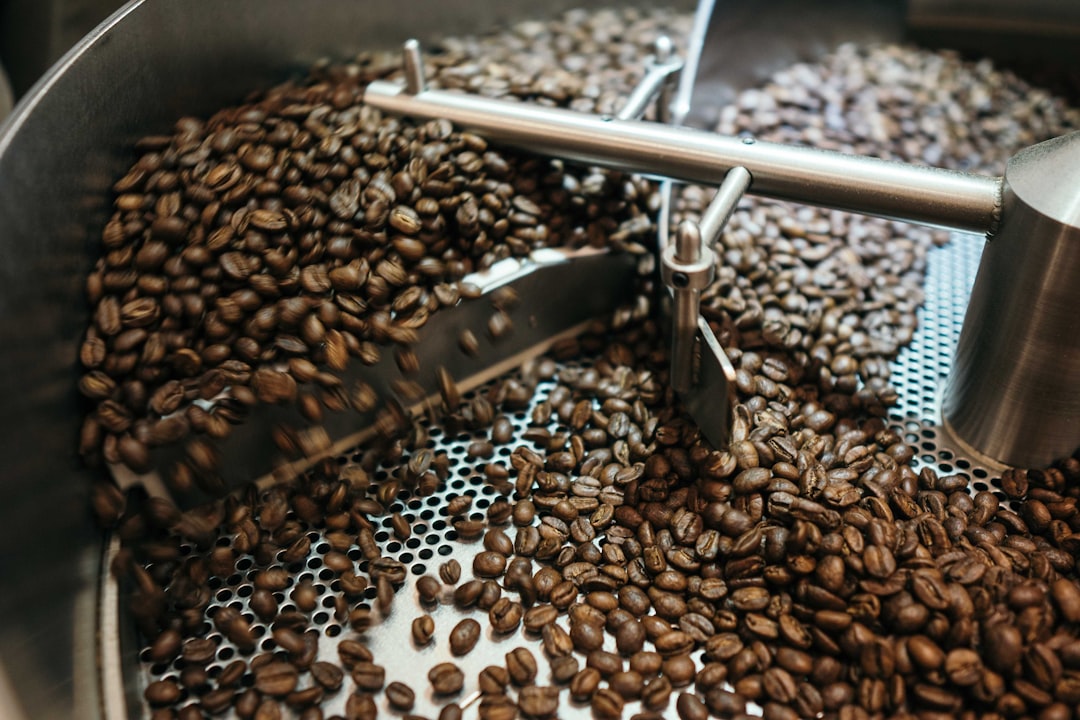
Photo by Battlecreek Coffee Roasters on Unsplash.