You are standing in your kitchen, the Ikawa Home humming its high-pitched whine, watching 50 grams of green coffee dance in a suspended column of air. The app on your phone shows a temperature curve climbing steadily toward 200 degrees Celsius. You feel like a scientist. You feel like a roaster. But when you grind those beans for your morning pour-over, the cup tastes thin, hollow, and aggressively acidic, and you are left wondering why the expensive gadget that promised you a perfect roast delivered a chemical stress test instead.
The Ikawa Home is not a roaster. It is a highly precise, rapidly cycling thermal stress test designed to dial in brew recipes, not to roast coffee for drinking. The machine’s core architecture, a single heating element, a suspended air stream, and a 50-gram batch size, forces a thermal dynamic that no conventional drum or fluid-bed roaster replicates. When you use it to roast for consumption, you are fighting a physics problem that guarantees uneven extraction, regardless of how perfectly you follow the app’s curves.
Understanding this distinction is the difference between wasting expensive green coffee and actually improving your home brewing. The Ikawa Home is an incredibly powerful tool, but only if you stop treating it like a roaster and start treating it like a dial-in instrument.
The 50-Gram Thermal Mass Problem
The single biggest constraint on the Ikawa Home is the batch size. The machine is engineered to roast 50 grams of green coffee. In the world of professional roasting, 50 grams is not a batch; it is a sample. It is a speck of dust in a room full of air. When you load 50 grams into the Ikawa’s chamber, you are dealing with a thermal mass so low that the machine’s heating element and the surrounding air volume completely overwhelm the beans themselves.
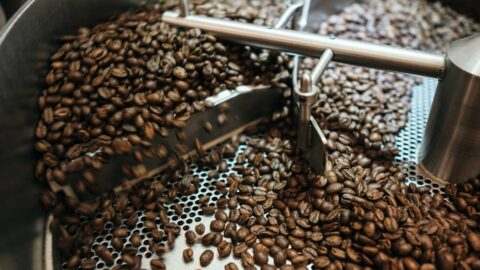
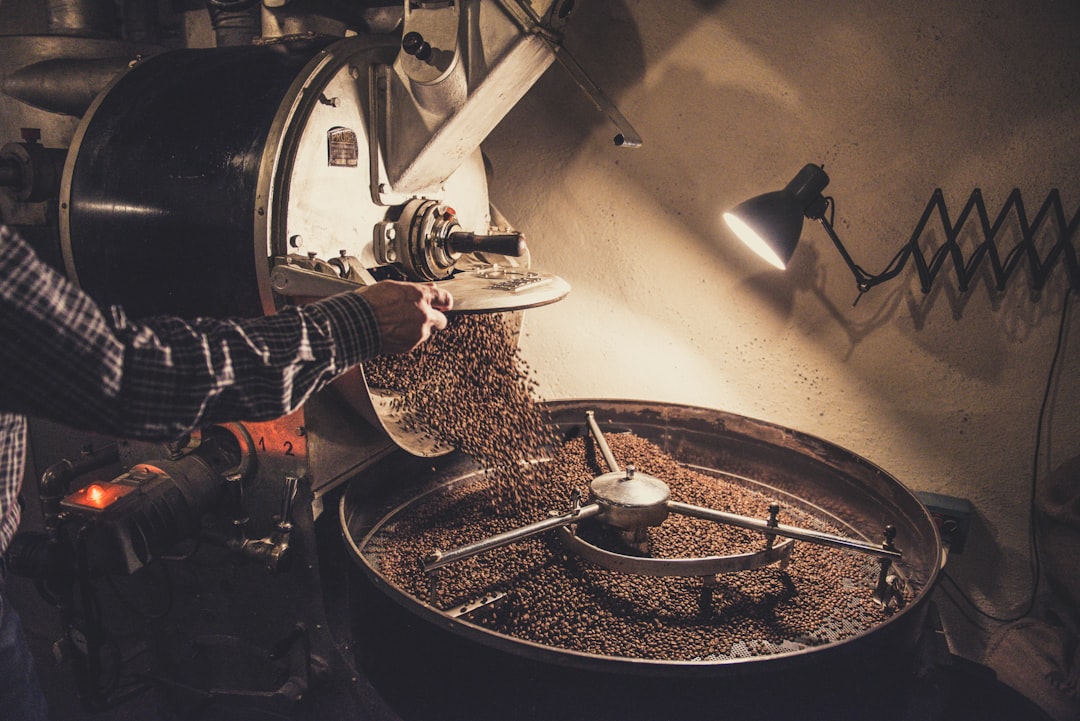
In a traditional drum roaster, the thermal mass of the beans dominates the heat transfer. The drum acts as a massive thermal battery, storing heat and releasing it slowly and evenly to the beans through conduction. The beans dictate the rate of rise. In the Ikawa, the beans do not dictate anything. The machine dictates everything. The heating element blasts air at high velocity, forcing heat onto the surface of the beans faster than the heat can penetrate to the center. This creates a massive thermal gradient within the bean itself.
When a bean is subjected to this rapid, high-velocity air suspension, the exterior heats up and begins to undergo the Maillard reaction and caramelization almost instantly. The interior, however, lags behind. The center of the bean remains underdeveloped while the exterior is already approaching the threshold of scorching. This is not a roasting profile; it is a thermal shock. The bean is being stress-tested to see how much heat it can absorb before its structure fails, not roasted to develop its flavor compounds evenly.
This is why the Ikawa Home is so effective for dialing in brew recipes. You need to know how a specific grind size and water temperature extract from a specific bean. The Ikawa gives you a rapid, reproducible roast that highlights the bean’s structural properties. But when you try to drink that coffee, you are drinking the result of that thermal shock. The cup will taste hollow because the center of the bean was never fully developed, and it will taste acidic because the rapid heating locked in certain organic acids that would normally break down in a slower roast.
Air Suspension vs. Conduction
Roasting is, at its core, a heat transfer problem. There are three modes of heat transfer: conduction, convection, and radiation. A traditional drum roaster relies primarily on conduction. The beans are in direct contact with the hot metal drum, and the heat moves from the metal into the bean. This is a slow, steady, and even process. It allows the heat to penetrate the bean uniformly, developing the sugars and acids at a consistent rate from the outside in.
The Ikawa Home, by contrast, relies almost entirely on convection. It uses a high-velocity stream of hot air to suspend the beans and transfer heat to their surface. This is incredibly fast. It is also incredibly uneven. The surface of the bean is being bombarded by hot air, while the interior is being heated by conduction from the outer layer. This creates a steep temperature gradient within the bean. The outer layer might be at 200 degrees Celsius while the center is still at 150 degrees.
This gradient is the enemy of a good cup of coffee. When you brew this coffee, the outer layer of the bean extracts quickly, releasing bitter, astringent compounds. The center of the bean extracts slowly, releasing sour, underdeveloped acids. The result is a cup that tastes disjointed, with sharp acidity and a hollow body. It lacks the sweetness and complexity that comes from a uniform development of the bean’s internal structure.
This is not to say that air roasting cannot produce good coffee. High-end fluid-bed roasters, like the Behmor or the FreshRoast, use air to roast coffee. But they do it slowly, with lower air velocities and larger batch sizes that allow the thermal mass of the beans to stabilize the process. The Ikawa’s air stream is so fast and so focused on such a small batch that it creates a thermal environment that is fundamentally different from a roasting environment. It is a stress test environment.
Why the App Curves Lie
The Ikawa app provides beautiful, smooth curves. It shows you the temperature of the beans, the rate of rise, and the time elapsed. It gives you the illusion of control. You can see the curve climbing, and you can adjust the power settings to shape it. But the app is lying to you. Or rather, it is showing you a metric that is irrelevant to the actual quality of the roast.
The app measures the temperature of the beans using a thermocouple embedded in the bottom of the chamber. But the beans are suspended in air. The thermocouple is not in direct contact with the beans. It is measuring the temperature of the air near the beans, and inferring the bean temperature from that. This is a rough estimate at best. It does not account for the thermal gradient within the bean. It does not account for the fact that the outer layer is much hotter than the center. It does not account for the fact that the beans are moving, tumbling, and changing their exposure to the heat source.
When you follow the app’s curve, you are following a ghost. You are trying to replicate a profile that does not exist in the physical world of the bean. The bean is not a single temperature. It is a gradient. And the app cannot show you that gradient. It can only show you an average that is skewed by the rapid heating of the outer layer.
This is why experienced Ikawa users develop their own techniques. They learn to listen to the sound of the beans. They learn to watch the color change. They learn to feel the vibration of the chamber. They learn to trust their senses over the app’s data. But even with all these techniques, they are fighting the fundamental physics of the machine. They are trying to roast coffee in a machine that was designed to stress-test it.
The Dial-In Protocol
If you are going to use the Ikawa Home, you must accept its limitations. You must stop trying to roast coffee for drinking. You must start using it for what it was designed for: dialing in your brew recipes. Here is how to do it correctly.
First, use the Ikawa to roast a small batch of your favorite green coffee. Roast it to a light roast, just past first crack. Do not try to go darker. The machine cannot handle the thermal mass required for a dark roast. Second, brew that coffee using your standard brew recipe. Note the flavor. Is it too sour? Too bitter? Too weak? Third, adjust your brew variables. Change the grind size. Change the water temperature. Change the brew time. Brew the coffee again. Repeat until you find the sweet spot.
This is the Ikawa’s true value. It allows you to rapidly iterate on brew recipes without buying multiple bags of expensive green coffee. You can roast 50 grams, brew it, taste it, adjust, roast 50 grams again, brew it again, and taste it again. In a few hours, you can dial in a complex brew recipe that would take weeks using a traditional roaster. But once you have dialed in your recipe, stop using the Ikawa. Roast your actual drinking coffee using a method that replicates the thermal dynamics of a real roast. Use a drum roaster, a fluid-bed roaster, or even a skillet. The Ikawa is a tool for learning, not for drinking.
When the Ikawa Fails
There are some coffees that simply do not work well with the Ikawa Home. Dense, hard beans, like high-altitude Ethiopians or Kenyans, are particularly difficult. Their density makes it hard for the air stream to penetrate the bean, leading to a severe thermal gradient. The outer layer scorches while the center remains raw. You will get a cup that tastes like a mix of burnt toast and sour fruit. It is undrinkable.
Softer, less dense beans, like Brazilian or Sumatran coffees, fare better. They absorb heat more easily, so the thermal gradient is less severe. But even then, the cup will lack the sweetness and complexity of a properly roasted bean. The Ikawa is not a roaster. It is a stress test. And some beans simply fail the stress test.
If you are looking for a roaster that produces drinkable coffee, look elsewhere. The Ikawa Home is a brilliant tool for dialing in brew recipes, but it is a terrible tool for roasting coffee for consumption. Accept that, and you will get the most out of this unique machine. Ignore that, and you will be left with a humming box and a cup of thin, acidic coffee.
The Ikawa Home is a marvel of engineering. It is precise, fast, and data-rich. But it is a thermal stress test. And until you accept that, you will never get the most out of it.
Sources & Further Reading
- Heat Transfer in Coffee Roasting: Conduction vs. Convection — ScienceDirect
- The Physics of Coffee Roasting: Thermal Mass and Gradient — Coffee Roasting.org
- Specialty Coffee Association: Roasting Guidelines — Specialty Coffee Association
- Coffee Chemistry: The Maillard Reaction and Caramelization — ScienceDirect
Photo by Yanapi Senaud on Unsplash.