You are standing over the Ikawa, watching a single 50-gram batch of beans tumble through heated air. The fan is blasting, the beans are flipping end-over-end in a chaotic dance of thermal energy, and it feels like the right thing to do. Agitation should equal evenness, right? But when you pull the next batch, the cup tastes uneven. Some beans carry the sharp, grassy note of underdevelopment, while others drag the heavy, ashy weight of over-roasting. The agitation is not the variable controlling that balance. The heat transfer mechanism is.
The SR900 beats the Ikawa for consistency not because it stirs the beans harder, but because it does not rely on agitation to move heat. The Ikawa forces heat into a small batch through aggressive air movement. The SR900 relies on conductive contact and gentle tumbling. When you understand the physics of how heat crosses the bean’s surface, you stop chasing faster stirring and start designing for thermal stability. This article breaks down why agitation is a red herring for home roasters, how the SR900’s design actually solves the consistency problem, and what you need to change in your workflow to stop guessing.
Agitation Moves Beans. Conduction Moves Heat.
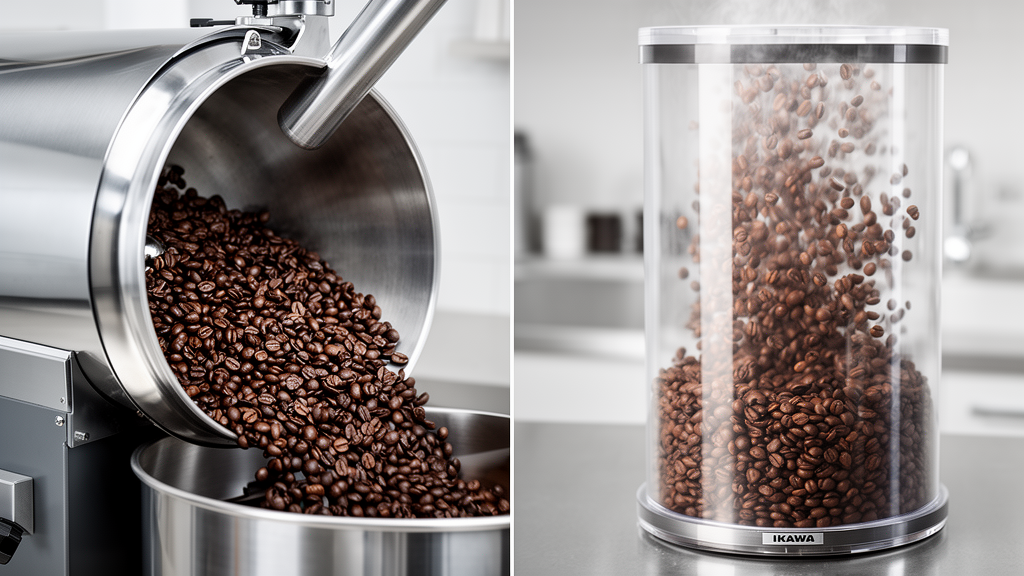
Most home roasters treat agitation as the primary lever for evenness. The logic is straightforward: if the beans are moving, they are exposing new surfaces to the heat source, so the roast should be uniform. This works perfectly in a fluidized bed roaster, where beans are suspended in a high-velocity air stream. The air itself is the heat carrier, and the agitation keeps the beans from settling into a static bed where they would scorch. The Ikawa is a fluidized bed roaster. It uses a powerful fan to keep 50 grams of coffee suspended in a narrow metal drum while a heating element blasts hot air from below. The agitation is not an accessory to the process; it is the mechanism of heat transfer.
Here is the problem with assuming agitation equals consistency. Agitation only works when the heat transfer mechanism is convection. In a fluidized bed, the air carries the energy. In a drum roaster, the energy comes from direct contact with the metal drum and, to a lesser extent, infrared radiation from the drum walls. If you stir beans in a drum roaster, you are simply moving them around the drum. You are not increasing the rate at which heat crosses the bean’s surface. You are just changing which part of the bean touches the metal at any given second.
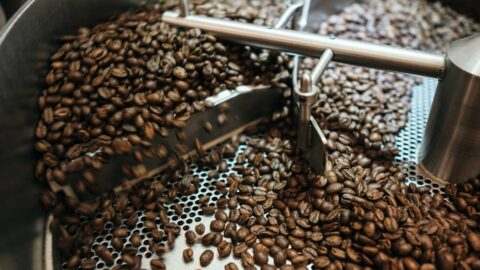
The SR900 is a drum roaster. It uses a small, heated drum that rotates slowly. The beans tumble, yes, but the primary heat transfer is conduction. The beans press against the hot metal surface, absorb heat, and then tumble away to cool slightly before pressing against the metal again. The agitation here is incidental. It prevents scorching by ensuring no single bean stays in contact with the hot metal long enough to burn. It does not drive the roast. The thermal mass of the drum does. This distinction is critical because it means the SR900’s consistency comes from its ability to maintain a stable thermal environment, not from how fast it stirs the beans.
When you compare the two machines, you are not comparing agitation speed. You are comparing heat delivery. The Ikawa forces heat through air. The SR900 delivers heat through metal. Air is a poor conductor of heat compared to metal. This is why the Ikawa requires massive fan power to move heat into the beans, and why it is so sensitive to ambient conditions. A drafty room, a cold floor, or even the humidity of the beans themselves can throw off the air density and disrupt the fluidization. The SR900, by relying on conductive contact, is insulated from these variables. The drum holds heat. The beans absorb it. The agitation simply ensures they do not sit in one spot long enough to burn.
Why the Ikawa’s Aggregation Creates Inconsistency
The Ikawa’s design forces a specific set of failure modes that agitation cannot fix. Because it relies on air suspension, the beans are constantly moving, but they are not always moving evenly. When beans clump together, the air bypasses the center of the clump, leaving those beans underdeveloped. When beans separate, the air hits them directly, potentially over-roasting them. This is why the Ikawa is famous for its “aggregation” problem. Beans stick together, form clumps, and roast unevenly. Agitation in the Ikawa is actually designed to break these clumps apart. The fan speed is adjustable, and higher speeds are meant to keep the beans separated.
But here is the catch: higher fan speeds do not make the roast more consistent. They make the roast faster, and they increase the rate of heat loss. The Ikawa is essentially fighting its own physics. It uses a high-velocity air stream to suspend the beans, but that same air stream cools the beans as it passes through them. The result is a roast that is highly sensitive to the initial temperature of the beans, the ambient temperature of the room, and even the moisture content of the green coffee. A bean that is 1% wetter than the others will absorb more heat to evaporate that water, slowing its roast rate. The Ikawa’s agitation cannot compensate for this. The air just moves faster, and the bean falls behind.
The SR900 does not have this problem. Because it relies on conductive heat transfer, the roast rate is determined by the temperature of the drum, not the speed of the air. The drum’s thermal mass acts as a buffer. It absorbs heat from the heating element and releases it steadily to the beans. The beans tumble, but they do not need to be suspended. They do not need to be kept apart by a forceful air stream. They simply need to be in contact with the drum. This makes the SR900 inherently more consistent. It does not rely on the complex fluid dynamics of a fluidized bed. It relies on the simple, predictable physics of conduction.
This is not to say the SR900 is perfect. Drum roasters have their own failure modes. If the drum rotates too slowly, the beans will scorch on the bottom. If it rotates too quickly, they will not absorb enough heat. But these are mechanical issues, not fluid dynamic ones. They are easy to fix by adjusting the rotation speed. The Ikawa’s issues are fundamental to its design. They cannot be fixed by adjusting the agitation. They can only be managed by adjusting the airflow, which is a constant balancing act.
The SR900’s Thermal Mass Is the Real Consistency Driver
The SR900’s secret weapon is its thermal mass. The drum is made of thick aluminum, and it holds a significant amount of heat. This thermal mass acts as a flywheel, smoothing out fluctuations in the heating element’s output. When the heating element cycles on and off, the drum does not cool down instantly. It releases its stored heat to the beans. This creates a stable, predictable roast environment. The beans are not subjected to the rapid temperature swings that occur in a fluidized bed roaster, where the air temperature can fluctuate wildly based on fan speed and bean moisture.
This stability is what makes the SR900 more consistent than the Ikawa. When you roast on the SR900, you are not fighting the air. You are working with the drum. The drum’s temperature is easy to monitor and control. You can set the heating element to a specific power level, and the drum will reach a stable temperature. The beans will roast at a predictable rate. The agitation ensures that the beans do not scorch, but it does not drive the roast. The drum does. This makes the SR900 easier to dial in, and it produces more consistent results batch after batch.
The Ikawa, by contrast, requires you to constantly monitor and adjust the fan speed. If the beans are clumping, you increase the fan speed. If the beans are roasting too fast, you decrease the fan speed. This constant adjustment introduces variability. You are not just managing heat transfer; you are managing air dynamics. This is why the Ikawa is so difficult to master. It requires a level of attention and adjustment that most home roasters are not willing to give. The SR900, by relying on thermal mass, removes this variable. You set the drum temperature, you start the roast, and you let the drum do the work. The agitation ensures evenness, but it does not drive the roast.
How to Dial In the SR900 for Maximum Consistency
If you want to get the most out of the SR900, you need to stop thinking about agitation. You need to start thinking about thermal mass. The key to consistency is not how fast the drum rotates, but how hot the drum is. A hotter drum will roast the beans faster, but it will also be more consistent. A cooler drum will roast the beans slower, but it will be less consistent. This is because a hotter drum has more thermal energy to draw from, which smooths out fluctuations in the heating element’s output. A cooler drum is more susceptible to those fluctuations.
To dial in the SR900, start by setting the heating element to a high power level. Let the drum reach a stable temperature. Then, add your beans. Monitor the roast. If the beans are roasting too fast, lower the heating element’s power level. If they are roasting too slow, increase it. The goal is to find a power level that produces a stable, predictable roast rate. Once you find that power level, stick with it. Do not adjust the fan speed. Do not adjust the agitation. Let the drum do the work.
This approach will give you more consistent results than the Ikawa, not because the SR900 is a better machine, but because it is a simpler machine. It does not rely on complex air dynamics. It relies on simple, predictable physics. The agitation is just a safety feature, ensuring that the beans do not scorch. It is not the driver of the roast. The thermal mass is. When you understand this, you stop chasing faster stirring and start designing for thermal stability. You stop guessing, and you start roasting.
The SR900’s agitation advantage is not that it stirs the beans harder. It is that it does not need to. By relying on conductive heat transfer, it removes the variability of air dynamics and replaces it with the stability of thermal mass. This is why it beats the Ikawa for consistency. It is about how steadily the heat is delivered. And that makes all the difference.
Sources & Further Reading
- Roasting Science: The Physics of Heat Transfer in Coffee — ScienceDirect
- Fluidized Bed Roasting: Principles and Applications — ResearchGate