You set up the kettle, the scale, the V60. You’ve watched the tutorial on the spiral pour. You’ve timed the bloom. You’ve even bought a gooseneck kettle that costs more than your first car. And your coffee still tastes papery. You blame your pour. You blame your hand. You blame the spiral. The problem is the paper.
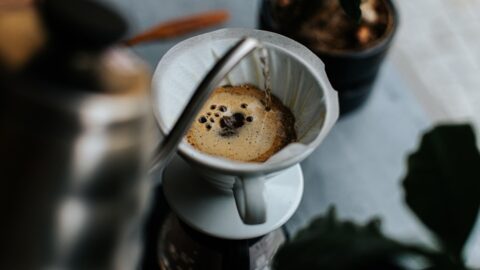
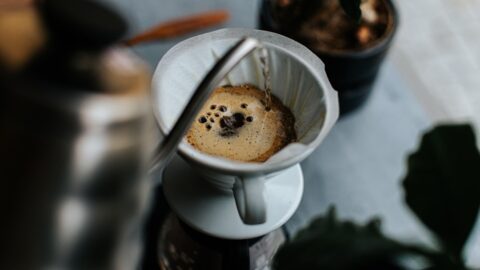
Every home brewer who picks up a Hario V60 eventually learns the ritual: bloom for 30 seconds, pour in slow concentric circles, finish around 2:30, and watch the water drain through the paper filter. The internet is full of videos showing the “perfect” pour pattern, the tight spiral, the steady hand, the way the water never touches the very edge of the filter. You follow it exactly. And your cup tastes thin, papery, or ashy. You adjust your grind. You change your water. You buy a new kettle. The ritual is solid. The ritual is not the variable.
The variable is the paper. Specifically, the fluting, the glue, the thickness, the mineral content, and the manufacturing process of the filter itself. The V60’s signature paper does something that no other dripper’s paper does, and understanding what it does to extraction is the difference between a cup that tastes like a V60 and a cup that tastes like whatever your kettle can produce.
The Fluting Is Not Decorative
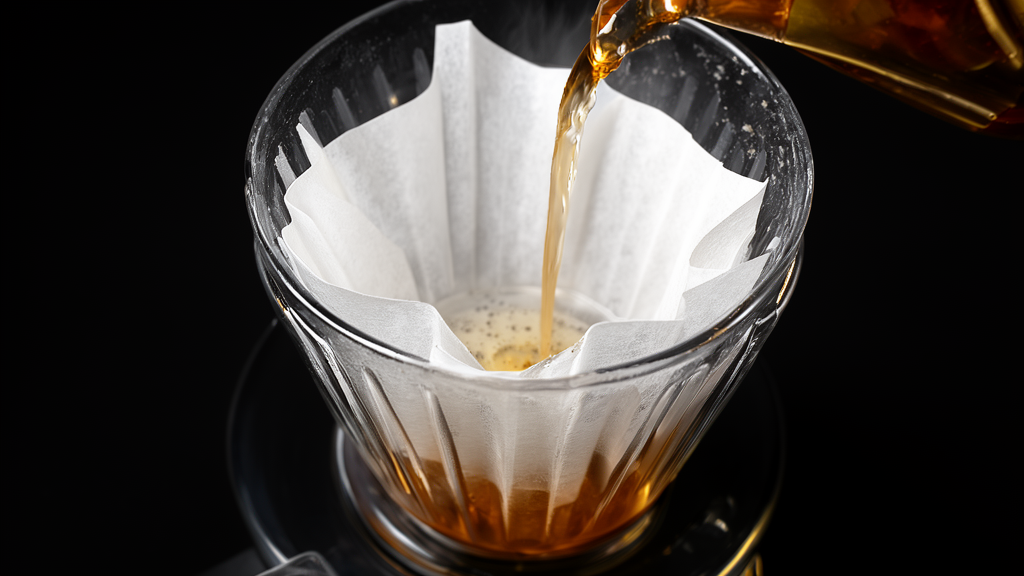
Look at a V60 paper filter before you wet it. It has deep vertical pleats, fluting, running from the rim to the apex. This is not a manufacturing artifact. It is the entire reason the V60 works the way it does.
When you place that filter in the ceramic or glass V60, those pleats pull the paper away from the dripper’s walls. Water flows through the filter, but it also flows through the gaps between the pleats and the ceramic. Those gaps are channels. They are bypass channels. They are the single most misunderstood variable in pour-over brewing.
Most brewers think the paper is a barrier. It is not. The paper is a controlled resistance. The bypass channels are the release valve. When you pour water into a V60, roughly 15–25% of that water never touches the coffee grounds. It slides down the fluted gaps and exits the dripper untouched. This is not a flaw. This is a design feature. The V60 was engineered to use bypass extraction to balance a high surface-area grind against a fast brew time.
Other drippers, the Kalita Wave, the Chemex, the standard cone, do not flute their filters the same way. A Kalita Wave filter sits flat against the ridges. A Chemex filter is thick and unfluted, forcing nearly 100% of the water through the grounds. The V60’s fluting is what makes it fast, what makes it bright, and what makes it forgiving of a slightly coarse grind. Remove the fluting, and you remove the V60’s identity.
Paper Thickness Controls Extraction Speed
Not all V60 paper is created equal. Hario sells at least three distinct filter lines, and they extract differently because they are manufactured differently. The difference is not marketing. It is physics.
The standard white V60 paper filter is bleached with oxygen, not chlorine. It is thinner than most competitors. It lets water pass through quickly, which is why the V60 recipe calls for a 1:16 or 1:17 ratio and a 2:30–3:00 total brew time. The paper does not restrict flow enough to cause over-extraction, even at a medium-fine grind. That is why it is the default recommendation for light-roast Ethiopian naturals and Kenyan AA.
The unbleached brown V60 paper filter is not bleached at all. It is thicker. It is denser. It restricts flow. If you use the brown paper with the same grind, ratio, and pour as the white paper, your brew time will stretch by 30–45 seconds, and your cup will taste more extracted, more body, more bitterness, less clarity. The brown paper is a different extraction variable. It is not a “eco-friendly” choice. It is a flavor choice.
Then there is the V60 Gold filter, the plastic mesh disc that sits inside the paper. It is not a filter. It is a flow regulator. It forces water through the paper at a controlled rate, reducing the bypass effect of the fluting. If you have ever used a V60 and wondered why your coffee tastes thinner than expected, the Gold disc may be the reason. It removes the bypass channels. It forces 100% of the water through the grounds. The result is a cup that tastes more like a Kalita Wave than a V60. Some brewers love it. Most do not realize they have changed the machine.
The Glue Changes the Flavor
Every paper filter is held together by a small amount of adhesive at the apex. The type of glue matters. Hario uses a food-grade, chlorine-free adhesive. Some third-party filters use a stronger, more visible glue that can leach into hot water during the bloom. If your coffee tastes papery, bitter, or chemical, the first thing to check is not your grind. It is your filter’s glue.
Third-party filters, the Cafec, the Fellow, the Origami, use different glues, different thicknesses, and different flute depths. They extract differently. This is why a Cafec filter in a V60 dripper does not taste exactly like a Hario filter in the same dripper. The dripper is the same. The paper is different. The extraction is different. If you switch brands and your coffee tastes suddenly sharper or more muted, do not change your grind. Change your filter back. The paper is the variable.
How to Test Your Own Paper
You can test your filter paper without brewing a single cup. Here is the method:
- Place a dry filter in your V60 dripper.
- Pour 200 grams of 93°C water directly into the filter, no grounds, no bloom, just water.
- Time how long it takes for the water to drain completely.
If your white Hario filter drains in 45–60 seconds, it is standard. If it drains in 70–90 seconds, it is likely unbleached brown paper or a thicker third-party brand. If it drains in under 30 seconds, the paper is too thin or the fluting is too aggressive, and you will need to adjust your grind coarser to compensate.
This test reveals what your filter is doing before you ever add coffee. It tells you whether you are fighting the paper or working with it. Most brewers skip this step. They assume all filters behave the same. They do not. The paper is the variable. The paper is the reason your V60 tastes the way it does.
When the Paper Is Not the Problem
Not every papery or thin cup is a filter problem. If your brew time is fast, your grind is too coarse. If your brew time is slow, your grind is too fine. If your water is too soft, your coffee will taste flat regardless of the paper. If your roast is light and your extraction is low, no filter will save you. The paper is a variable, not a cure-all.
But if your brew time is in the 2:30–3:00 range, your grind is medium-fine, your water is 93°C, and your coffee still tastes papery or ashy, check your filter. Switch to a different brand. Switch to unbleached. Remove the Gold disc. See what changes. The paper is the variable. The paper is the reason your V60 tastes the way it does.