The Moment You Pour the Last 10 Grams
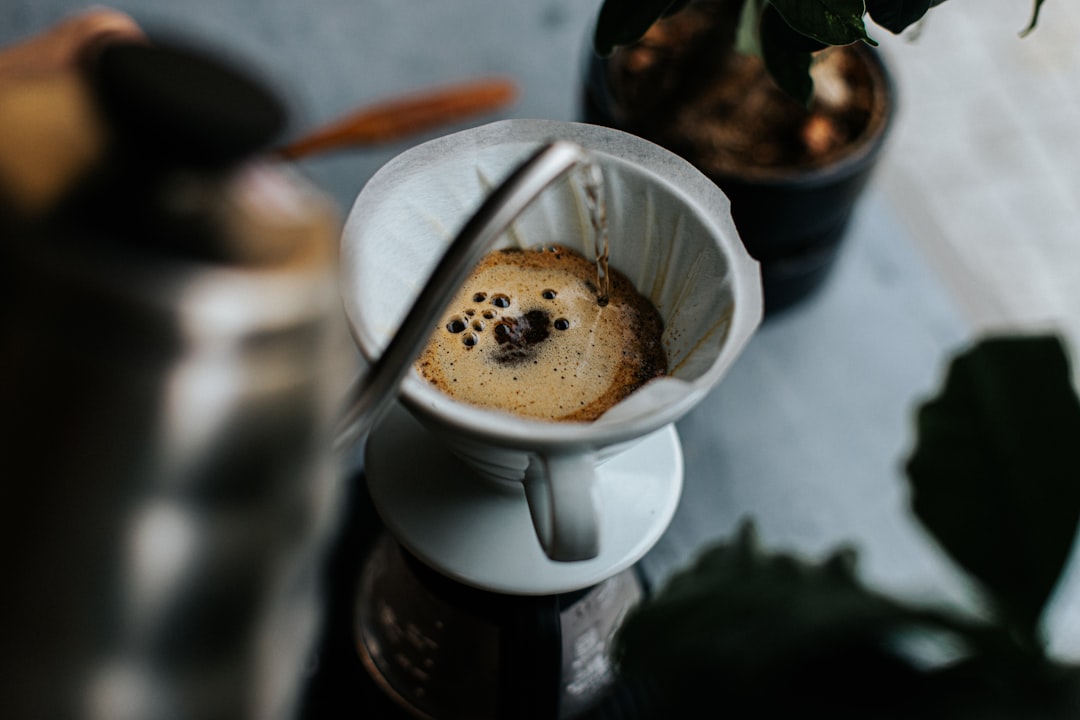
You have 15 grams of coffee in the V60. The water level is rising, the bloom is done, and your timer reads 1:15. You pour the final 10 grams of water, watching the liquid level crest just above the paper fold. The total brew time hits 2:45. Most brewing guides would tell you this is a success. The Specialty Coffee Association’s recommended ratio for pour-over is 1:16, and you are sitting at 1:15.8. You are essentially on target. But as you lift the dripper, you notice the cup feels slightly heavier, slightly more viscous than it should for a light-roast Ethiopian. It is not bitter, but it lacks the clean, tea-like finish you chase. You grind finer next time, and the brew drags to 3:15, pulling out the exact harshness you were trying to avoid. The 1:16 ratio is not the problem. It is the lie that keeps you grinding finer and finer until the cup breaks.
The 1:16 ratio is a lie because it treats coffee extraction as a linear math problem rather than a physical filtration process. When you brew at 1:16, you are forcing the water to do more work to extract the same soluble compounds, which pushes the brew closer to the edge of over-extraction for many modern, high-quality beans. A 1:15 brew ratio, by contrast, keeps the dissolved solids concentration slightly lower, allowing the water to extract the bright acids and sugars without pulling the heavy, bitter compounds that live at the very end of the extraction curve. The cleaner cup does not come from a different grind setting. It comes from recognizing that slightly less water per gram of coffee acts as a natural filter against over-extraction.
What the 1:16 Ratio Actually Does to Your Cup
The 1:16 ratio was popularized by home-brewing advocates who wanted a single, easy-to-remember number to replace the vague “brew until it tastes right” advice. It is a brilliant marketing number, but it is a terrible physical target. When you use 16 grams of water for every 1 gram of coffee, you are creating a solution with a higher concentration of dissolved solids. According to the Specialty Coffee Association’s Brewing Standards, the target Total Dissolved Solids (TDS) for a well-brewed pour-over is between 1.15% and 1.45%. A 1:16 ratio naturally pushes the TDS toward the upper end of that range, often landing between 1.35% and 1.45% depending on the bean’s density.
This higher concentration is not inherently bad. A 1.40% TDS cup can be delicious. The problem arises when you try to hit that TDS target using the standard grind size recommended for a 1:16 ratio. Because the water is doing more extraction work per gram of coffee, the brew becomes highly sensitive to grind distribution. If your grinder creates even a small number of oversized particles, those particles will under-extract, leaving sour, grassy notes. To compensate, you grind finer. Grinding finer increases the surface area of the fines, which over-extracts the bitter compounds, creating a harsh, astringent finish. You are now caught in a double bind: the 1:16 ratio demands a fine grind to hit the TDS target, but that fine grind pulls bitter compounds that ruin the cup.
A 1:15 ratio breaks this cycle. By using 15 grams of water per gram of coffee, you are creating a slightly more dilute solution. The TDS target remains the same, but you reach it with a coarser grind setting. A coarser grind means fewer fines in the final cup. Fewer fines mean less surface area for bitter compounds to dissolve. The result is a cup that tastes cleaner, brighter, and more transparent, even though the extraction yield might be nearly identical on paper. The difference is not in how much you extract. It is in what you extract.
The Physics of Fines and the 1:15 Advantage
To understand why 1:15 extracts cleaner, you have to look at the particle size distribution of your grind. Burr grinders do not produce perfectly uniform particles. They produce a distribution, with a heavy concentration of medium particles, a tail of fine particles, and a few oversized chunks. The fines are the problem. They have a massive surface area relative to their mass, meaning they dissolve incredibly fast. When you brew at 1:16, you are pushing the water to extract the maximum amount of soluble material from those fines. Because the water is highly concentrated, it pulls both the good sugars and the bad bitter alkaloids from those fine particles.
When you drop to a 1:15 ratio, you are effectively giving the water a slightly easier job. You are not trying to pull as much out of the coffee bed, so you can afford to use a coarser grind. A coarser grind shifts the particle size distribution upward. There are fewer fines, and the fines that do exist are larger, meaning they dissolve more slowly. This slows down the rate at which bitter compounds enter the cup, giving you a wider window of clean extraction. The water flows through the bed more freely, reducing the chance of channeling or stagnation. The cup tastes cleaner because the bitter compounds simply do not have the same opportunity to dissolve.
This is not a theoretical exercise. You can test it yourself with a simple A/B brew. Take a single bag of light-roast coffee. Grind half of it for a 1:16 brew (15g coffee to 240g water). Grind the other half for a 1:15 brew (15g coffee to 225g water). Adjust the grind size of the 1:15 batch until the brew time is roughly the same as the 1:16 batch. You will find that the 1:15 batch requires a noticeably coarser setting. Taste them side by side. The 1:16 batch will likely taste richer, slightly heavier, but with a lingering harshness. The 1:15 batch will taste brighter, cleaner, and more transparent. The 1:15 ratio is not weaker. It is more precise.
Why Modern Beans Demand 1:15
The 1:16 ratio was designed for a different era of coffee. It works well for medium-roast, commercial-grade beans that are dense and forgiving. But modern specialty coffee, particularly high-altitude Ethiopian and Kenyan naturals, is fundamentally different. These beans are grown at higher elevations, which creates a denser cellular structure. They are processed using methods like natural or honey, which leave more sugars and fruit compounds on the bean. When you brew these beans at 1:16, you are pulling a massive amount of soluble material from a dense, sugar-rich matrix. The result is often a cup that tastes muddy or jammy, masking the delicate floral and fruity notes that make these beans desirable.
A 1:15 ratio respects the structure of modern beans. By using slightly less water, you are extracting fewer of the heavy, jammy compounds that obscure the bright acids. You are allowing the delicate floral notes to shine through without the background noise of over-extraction. This is why many top-tier baristas and competition brewers are quietly moving toward 1:15 or even 1:14 ratios for light roasts. They are not trying to make the coffee weaker. They are trying to make it clearer.
This shift is not just a trend. It is a response to the physical reality of modern coffee. As roasters push for lighter and lighter roasts to preserve origin character, the beans become more fragile. They extract faster, and they break easier. A 1:16 ratio pushes them to the breaking point. A 1:15 ratio keeps them safely within the extraction window, allowing you to pull out the best flavors without pulling out the worst. It is a subtle shift, but it is the difference between a good cup and a great one.
How to Dial In a 1:15 Brew
Switching to a 1:15 ratio is not about following a rigid recipe. It is about understanding the relationship between water, coffee, and extraction. Start with your standard dose of 15 grams of coffee. Instead of pouring 240 grams of water, pour 225 grams. Adjust your grind size until the brew time falls between 2:30 and 3:00 minutes. If the brew drains too fast, grind finer. If it drags past 3:00, grind coarser. The goal is not to match a specific time. The goal is to find the grind setting that allows the water to flow through the bed smoothly, without channeling or stagnation.
Once you have your grind setting, taste the cup. If it tastes sour, grind finer. If it tastes bitter, grind coarser. The 1:15 ratio gives you a wider margin for error than 1:16, so you will find it easier to dial in. You will also find that your coffee tastes cleaner, brighter, and more transparent. This is not a coincidence. It is the result of pulling fewer bitter compounds from the coffee bed, allowing the bright acids and sugars to take center stage.
The 1:16 ratio is a convenient number, but it is a starting point, not a destination. By dropping to 1:15, you are not making a mistake. You are making a choice. You are choosing clarity over weight, brightness over jamminess, and precision over convenience. It is a choice that modern coffee demands, and one that your next cup will prove.
The 1:15 Ratio Is Not a Lie. 1:16 Is.
The 1:16 ratio is a lie because it pretends that extraction is a simple math problem. It is not. It is a complex physical process that depends on the bean, the grind, the water, and the filter. A 1:15 ratio respects that complexity. It gives you a wider window for clean extraction, allowing you to pull out the best flavors without pulling out the worst. It is a physical reality. And once you taste the difference, you will never go back.
Sources & Further Reading
- Specialty Coffee Association Brewing Standards — Specialty Coffee Association
- The Science of Coffee Extraction — World Coffee Research
- Particle Size Distribution and Extraction Yield — Trends in Food Science & Technology
Photo by Szymon Satora on Unsplash.