The Paper Barrier Nobody Talks About
Everyone tells you to heat your water to 96°C (205°F) and pour it over the coffee bed with precision. They give you the bloom ratio, the pour pattern, the grind setting, and the total brew time. They do not tell you that the paper filter itself is the single largest thermal sink in your entire setup, and that ignoring it will guarantee a sour cup regardless of how carefully you heat your kettle.
Here is the reality: a dry paper filter absorbs roughly 15 to 20 grams of water during the initial saturation phase. That water is sitting in unbleached wood pulp, at room temperature, directly in the path of your 96°C brew water. When you pour, you are not just extracting compounds from the coffee grounds. You are heating up a cold, wet sponge that is actively stealing thermal energy from your brew before it even touches the coffee bed.
If you skip preheating, or if you preheat with a quick splash that evaporates before the coffee goes in, you are pouring 96°C water into a system that instantly drops to roughly 88°C (190°F) by the time it reaches the grounds. That 8-degree drop is not a rounding error. It is the difference between extracting the bright, complex acids you want and pulling out the harsh, astringent compounds that make your cup taste flat and sour.
The Physics of a Cold Filter
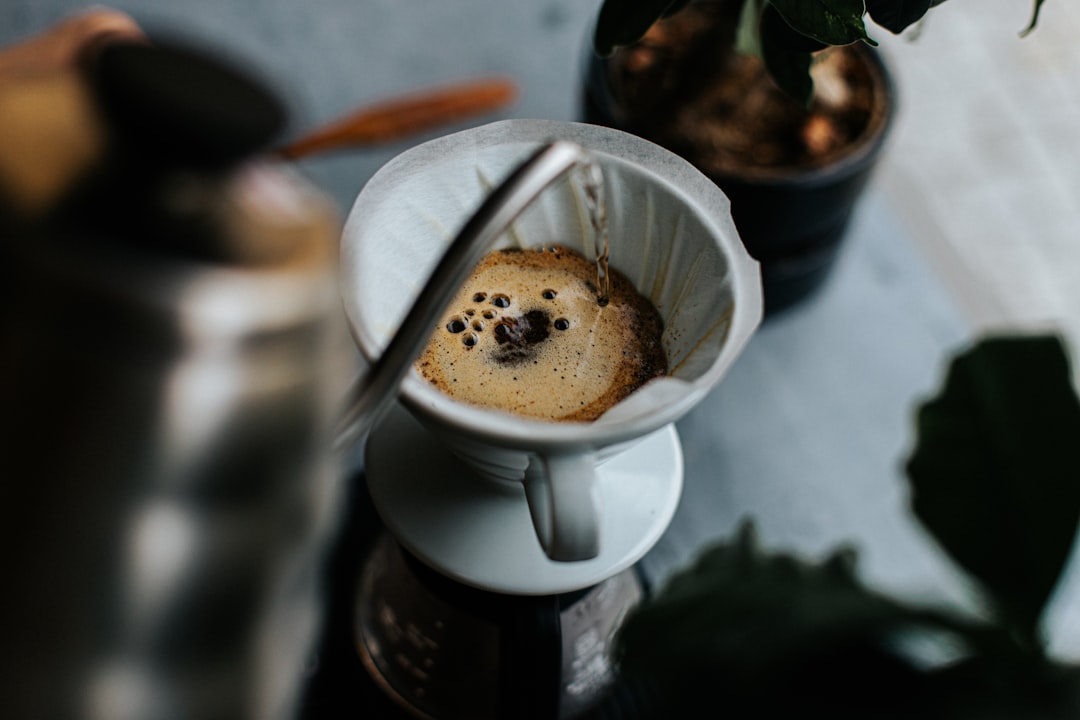
Let’s look at the actual mechanics of what happens when you pour 300 grams of 96°C water into a standard Hario V60 with a dry, room-temperature paper filter. The paper itself has a specific heat capacity, but more importantly, it has a massive surface area relative to its mass. It is designed to absorb water. When it absorbs water, it pulls heat from that water to reach thermal equilibrium.
A standard paper filter weighs about 1.5 grams. When dry, it is roughly 20°C (68°F). When you saturate it with 15 grams of water, you are creating a 16.5-gram mass of cold, wet paper. To bring that mass up to the temperature of your brew water, the paper must absorb a significant amount of thermal energy. The water gives up that energy, and the temperature drops.
Using basic thermodynamic principles, we can calculate the temperature drop. If you pour 300 grams of 96°C water into a system containing 16.5 grams of cold, wet paper, the final equilibrium temperature of the water before it even hits the coffee bed is approximately 93°C. That sounds fine on paper. But this calculation assumes perfect insulation, which your ceramic or glass dripper does not provide. The dripper itself, the carafe underneath, and the ambient air all pull heat away from the water as it passes through the filter.
By the time the water reaches the coffee bed, the temperature is often 4 to 6 degrees lower than what came out of your kettle. If you are brewing a light roast Ethiopian natural, which relies on precise high-temperature extraction to unlock those delicate floral and fruity notes, a 6°C drop pushes you into the under-extraction zone. You are not getting the flavor profile of that bean. You are getting a diluted, sour version of it.
Why Preheating Is Not Optional
This is why preheating your dripper is not a ritualistic step for coffee snobs. It is a thermodynamic necessity. When you pour hot water into your dripper and let it sit for 30 seconds, you are bringing the paper, the ceramic, and the glass to thermal equilibrium with your brew water. You are eliminating the thermal sink. When you then dump that preheat water and add your coffee, the water you pour next stays hot. It stays hot long enough to actually extract the compounds you paid for.
Many home brewers skip this step because it feels like extra work. They pour the water, it goes through the filter, and they wonder why the brew tastes thin. They grind finer. They increase the brew time. They add more coffee. They are chasing a symptom, not the cause. The coffee is under-extracted because the water was too cold, not because the grind was too coarse. Fixing the grind setting on a cold-filter brew is like trying to fix a flat tire by driving slower. It does not solve the underlying problem.
The Paper Type Factor
Not all paper filters are created equal. The thickness of the paper, the bleaching process, and the presence of glue or starch all affect how much heat the filter absorbs. Unbleached brown filters are typically thicker and contain more natural lignin, which means they absorb more water and require more preheating time to reach thermal equilibrium. Bleached white filters are thinner and process through chemical baths that remove some of that lignin, making them slightly less of a thermal sink, but they still require preheating.
If you are using a thick, unbleached filter, your preheating step needs to be more aggressive. Pour enough water to fully saturate the filter and let it sit for a full 45 seconds. If you are using a thin, bleached filter, 30 seconds is usually sufficient. The key is to feel the outside of the dripper. If it is still cool to the touch, it is still stealing heat from your brew. Wait until the dripper feels warm, then dump the water and proceed.
How to Execute a Proper Preheat
Executing a proper preheat is simple, but it requires discipline. Here is the exact protocol to follow every time you brew:
- Place your dripper on your carafe or server.
- Insert your dry paper filter.
- Pour roughly 300 grams of hot water (96°C / 205°F) directly into the filter, ensuring you saturate every inch of the paper.
- Let the water sit in the filter for 30 to 45 seconds. This gives the paper and the dripper time to absorb the heat.
- Feel the outside of the dripper. If it is still cool, wait another 15 seconds.
- Once the dripper feels warm, dump the preheat water from your carafe.
- Add your coffee grounds and begin your brew.
This process takes less than a minute, but it changes the thermal profile of your entire brew. It is the single most impactful variable you can control at home, aside from your grind size and water quality. Ignore it, and you are brewing with a handicap.
When Preheating Matters Most
Preheating matters most when you are brewing light roasts, which require higher temperatures to extract the complex acids and sugars that define their flavor profile. It matters less when you are brewing dark roasts, which extract more easily at lower temperatures. However, even with a dark roast, a cold filter will still pull the temperature down enough to mute the body and sweetness of the cup. Consistency is the goal, and a cold filter introduces a massive variable that changes from brew to brew depending on the ambient temperature of your kitchen.
The Bottom Line
Your pour-over water is not hot enough. It is the filter paper. By ignoring the thermal mass of your filter, you are actively sabotaging your extraction. Preheating is not optional. It is the foundation of a good cup. Do it every time, and your coffee will taste brighter, sweeter, and more complex. Skip it, and you will keep chasing flavors that are hiding behind a cold, wet sponge.
Frequently Asked Questions
Do I need to preheat ceramic drippers?
Yes. Ceramic has high thermal mass, meaning it absorbs and holds a lot of heat. If you do not preheat it, it will steal significant heat from your brew water, dropping the temperature by 5 to 8 degrees before the water even hits the coffee bed.
Does preheating matter for glass drippers?
Yes, but to a lesser degree. Glass has lower thermal mass than ceramic, so it does not steal as much heat. However, the paper filter itself is still a cold, wet sponge that absorbs water at room temperature. Preheating ensures that the water stays hot enough to extract the coffee properly.
What is the best water temperature for preheating?
Use the same temperature you plan to brew with. If you brew at 96°C (205°F), use 96°C for preheating. Using cooler water for preheating will not bring the filter to thermal equilibrium, and you will lose the benefit.
Can I use cold water to preheat?
No. Cold water will not bring the filter or the dripper to thermal equilibrium with your brew water. It will actually cool them down further, making the temperature drop even more severe when you pour your hot brew water.
How long should I let the preheat water sit?
Let it sit for 30 to 45 seconds. If the dripper feels cool to the touch after 30 seconds, wait another 15 seconds before dumping the water.
Sources & Further Reading
- Specialty Coffee Association of America (SCAA) Water Standards — Specialty Coffee Association
- The Science of Pour-Over Coffee: Water Temperature and Extraction — ScienceDirect (Journal of Food Engineering)
- Coffee Brewing Handbook: The Role of Water Temperature — World Coffee Research
Photo by Szymon Satora on Unsplash.