Stop Chasing 20% Extraction
You are measuring the wrong thing. Every home brewer who buys a refractometer eventually learns to chase the magic number: 20% extraction yield. You dial in your dose, adjust your grind, time your pour, and check the Total Dissolved Solids (TDS) on the assumption that hitting 20% means you have brewed a perfect cup. It does not. It means you have brewed a chemically balanced cup, which is a completely different problem.
The real issue is not the average amount of stuff dissolved in your water. It is how that stuff is distributed across the particle size spectrum. Two coffees can sit at exactly 20% extraction, yet one tastes like clean stone fruit and the other tastes like ash and raw bean. The difference is the extraction gradient.
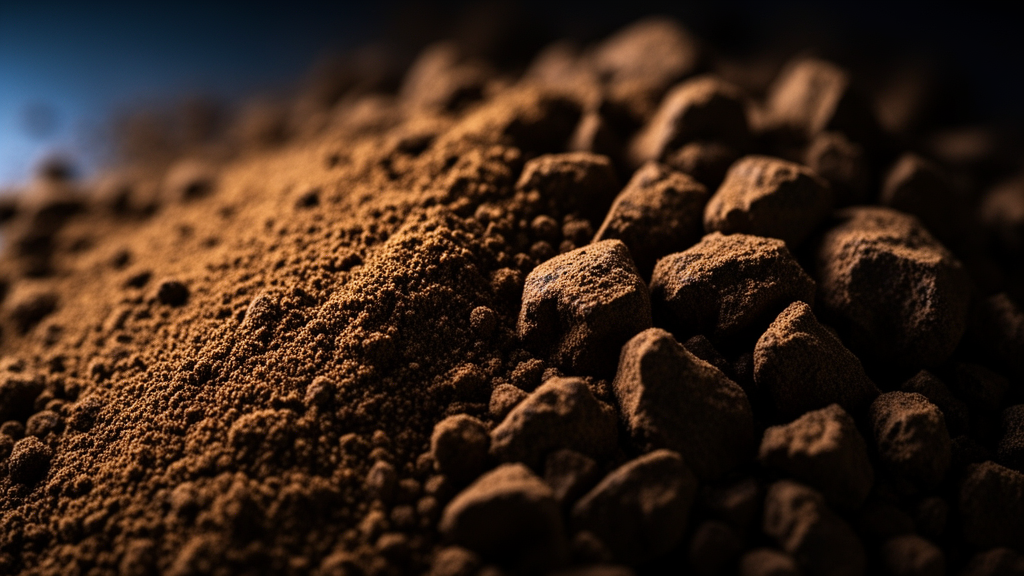
When you grind coffee, you do not get a single particle size. You get a distribution. A typical burr grinder produces a wide range of particle sizes, from fine dust that passes straight through a filter paper to coarse boulders that barely extract at all. This distribution is not a bug; it is a physical reality of mechanical grinding. The problem arises when we treat the entire bed of coffee as a single chemical entity, ignoring the fact that the fines are over-extracted while the boulders are under-extracted.
What the Refractometer Actually Hides
A refractometer measures the concentration of dissolved solids in your final cup. It gives you a single number. That number is the sum of everything that dissolved, divided by the total volume of water. It tells you nothing about the source of those solids.
Consider a standard pour-over brew. You grind your beans, pour water, and wait. The water interacts with the coffee bed differently depending on particle size. Fine particles have a massive surface area relative to their volume. They dissolve quickly, releasing acids and bright, fruity compounds early in the brew. Coarse particles have less surface area. They release heavier, bitter compounds slowly, and only if given enough time and contact.
If you grind too fine, the fines over-extract. They release bitter alkaloids and astringent phenols that linger on the back of the tongue. If you grind too coarse, the boulders under-extract, leaving behind sour, grassy notes. When you balance these two extremes, you might land on 20% extraction. The refractometer is happy. Your mouth is not.
This is the gradient problem. You have a cup where the fines are contributing 30% extraction worth of compounds, and the boulders are contributing 10%. The average is 20%, but the flavor profile is a collision of extremes. The refractometer cannot tell you that. It only sees the average.
The Gradient Is Controlled by Grind Distribution
If the refractometer cannot solve the gradient problem, what can? The answer lies in the particle size distribution of your grind. This is not a new concept, but it is rarely addressed in home brewing because it requires looking beyond the “medium” or “fine” labels on a grinder dial.
A narrow particle distribution means most of your particles are roughly the same size. A wide distribution means you have a mix of dust, fines, medium particles, and boulders. The wider the distribution, the steeper the extraction gradient within your brew.
When you use a blade grinder, you get a very wide distribution. You have a lot of dust and a lot of boulders. Your extraction gradient is steep. You will always struggle to balance the cup, no matter how much you adjust the dose. When you use a high-quality conical burr grinder, you get a narrower distribution. You have fewer boulders and less dust. Your extraction gradient is shallow. The cup tastes cleaner, more consistent, and more true to the bean’s origin.
This is why upgrading your grinder is the single most effective way to improve your brew. It is about getting a more uniform grind. A uniform grind reduces the gradient, allowing you to extract the boulders without over-extracting the fines.
How to Test Your Own Gradient
You do not need a refractometer to understand your gradient. You need a simple, two-brew test. This is a practical way to see how your specific grinder and bean interact.
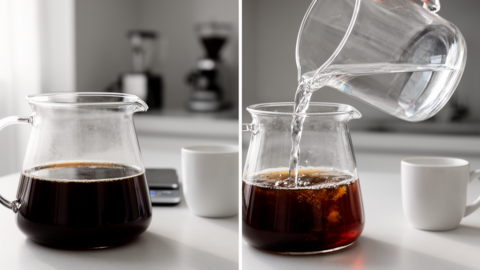
Brew two cups using the same coffee, same water, and same ratio. For the first cup, grind slightly coarser than you normally would. For the second cup, grind slightly finer. Brew both to your normal total yield. Taste them side by side.
If the coarser cup tastes sour and the finer cup tastes bitter, you have a steep gradient. The gap between the two extremes is wide. This tells you that your grinder is producing a wide distribution, and you are constantly balancing extremes. If the coarser cup tastes slightly under-extracted and the finer cup tastes only slightly over-extracted, you have a shallow gradient. Your grinder is producing a narrow distribution, and your cup is more consistent.
This test is more useful than any refractometer reading because it tells you how your specific setup handles the gradient. It shows you the width of the “sweet spot” available to you. A narrow gradient gives you a wider sweet spot. A steep gradient gives you a narrow one, requiring extreme precision to dial in.
Why This Matters for Your Daily Brew
Understanding the gradient changes how you approach every brew. Instead of chasing a target number, you focus on narrowing the distribution. You do this by using a better grinder, but also by adjusting your technique.
Agitation plays a role. Aggressive stirring or pouring can break up clumps and expose more surface area to the water, effectively narrowing the gradient by ensuring all particles extract at a similar rate. However, agitation cannot fix a fundamentally wide distribution. If your grinder is producing boulders, stirring will not dissolve them faster than the fines dissolve.
Brew time also matters. A longer brew time allows the boulders to catch up, reducing the gradient’s impact on the final cup. This is why immersion brewers like the French press or AeroPress often taste smoother than pour-overs, even with the same grinder. The extended contact time allows the under-extracted boulders to contribute more fully, balancing the over-extracted fines. Pour-over relies on a shorter contact time, which amplifies the gradient. This is why pour-over demands a more uniform grind than immersion.
The Original Contribution: The Gradient Ratio
Here is the practical takeaway. You can measure your extraction gradient by comparing the TDS of a coarse brew to a fine brew, using the same coffee and ratio. This is the Gradient Ratio.
Brew a coarse cup and a fine cup. Measure the TDS of both. Divide the fine cup’s TDS by the coarse cup’s TDS. A high ratio (above 1.5) indicates a steep gradient, meaning your grinder is producing a wide distribution. A low ratio (below 1.2) indicates a shallow gradient, meaning your grinder is producing a narrow distribution.
This ratio is a more useful metric than absolute extraction yield because it tells you the quality of your grind distribution. A low ratio means your cup will taste cleaner and more consistent, regardless of the exact yield. A high ratio means you are fighting a steep gradient, and your cup will always be a compromise.
Use this ratio to compare grinders, beans, and techniques. It is a tangible way to measure the invisible variable that controls your flavor. Stop chasing 20%. Start chasing a low Gradient Ratio. Your cup will taste better, and you will understand exactly why.
Conclusion
The pursuit of 20% extraction is a red herring. It is a number that hides the real story of your brew. The real story is the gradient, the distribution of particle sizes, and how they interact with water over time. A narrow gradient produces a clean, consistent cup. A steep gradient produces a compromised cup, no matter what the refractometer says. Focus on your grind distribution. Use a better grinder. Adjust your agitation. Understand the Gradient Ratio. This is the path to better coffee, not the path to a number.