Everyone who buys a titanium pour-over dripper believes they are buying thermal stability. They read the marketing copy, they see the brushed metal, and they assume the cup will taste like a ceramic V60 that forgot to get cold. It does not. The titanium dripper does not hold heat. It steals it. The difference between titanium and ceramic is not about stability. It is about the speed at which your brew cools, and that cooling curve dictates whether your coffee tastes like bright fruit or flat, under-extracted water.
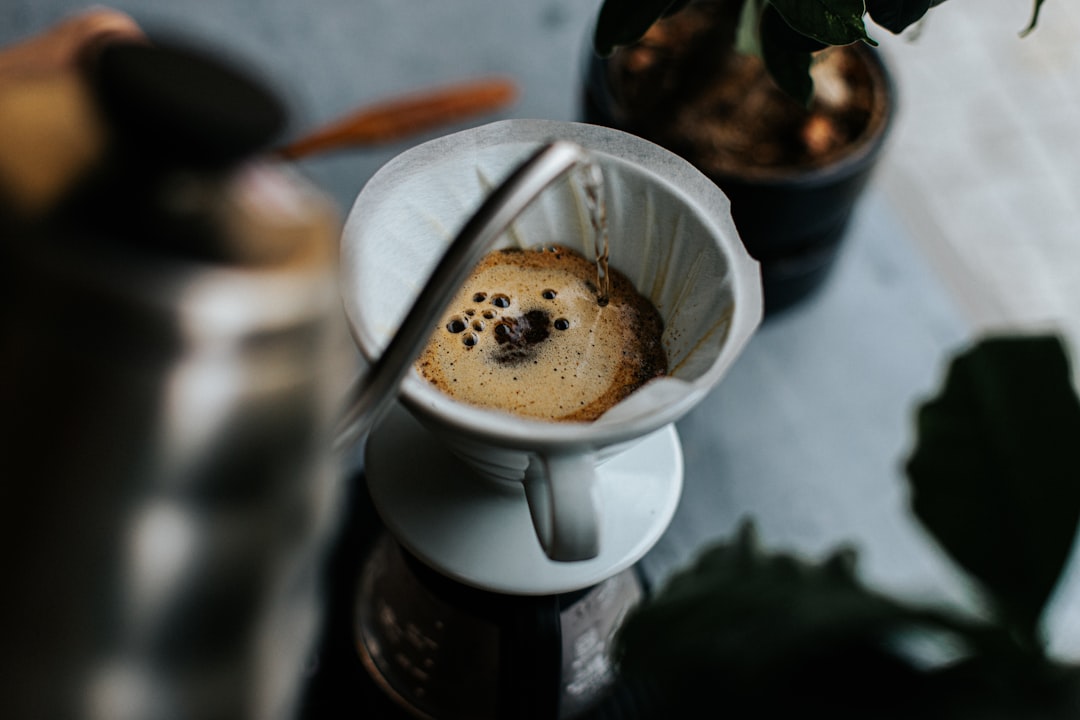
When you pour hot water over coffee grounds, you are running a heat-transfer experiment. The water starts at your target temperature, usually between 93 and 96 degrees Celsius. It hits the coffee bed, and it immediately begins losing energy to everything it touches. The filter paper. The grounds themselves. And the dripper sitting underneath. If that dripper is made of thin titanium, it absorbs that heat instantly, acting like a massive heat sink. If it is made of thick ceramic, it barely registers the interaction. This is not a subtle difference. It is a mathematical certainty that changes the chemistry of your extraction.
Most home brewers ignore this variable because they focus entirely on grind size and pour rate. They chase the perfect bloom. They time their pours to the second. They ignore the fact that the vessel holding their coffee is actively changing the temperature of the water during the brew. A titanium dripper can drop the water temperature by 10 to 15 degrees in the first thirty seconds. That is not a minor fluctuation. That is the difference between extracting delicate floral acids and extracting nothing but flat, sour water. If you are brewing a light roast Ethiopian natural on a titanium dripper without adjusting your recipe, you are not brewing coffee. You are making iced coffee that never got cold.
How Thermal Mass Actually Works in a Dripper
To understand why your titanium dripper is ruining your cup, you have to look at the physics of thermal mass. Thermal mass is simply the amount of heat energy a material can store. It is calculated by multiplying the mass of the object by its specific heat capacity. Ceramic has a high specific heat capacity, meaning it takes a lot of energy to change its temperature. Titanium has a very low specific heat capacity, but a titanium dripper is also incredibly thin and light. The combination of low mass and low heat capacity means a titanium dripper has almost zero thermal inertia.
When you pour 95-degree water into a ceramic dripper, the ceramic absorbs a small amount of that heat. Because the ceramic is thick and dense, it warms up slowly. It acts as a buffer. The water stays hot longer, maintaining a steady extraction temperature throughout the brew. The ceramic dripper is essentially a thermal battery that keeps the water near your target temperature.
Now, swap that ceramic dripper for a titanium one. The titanium is thin, maybe 0.2 millimeters thick. It weighs almost nothing. When you pour 95-degree water into it, the titanium absorbs that heat instantly. It does not buffer the temperature. It drops it. The water temperature plummets as it passes through the coffee bed. The extraction slows down. The acids do not dissolve. The sugars do not caramelize. The result is a cup that tastes thin, sour, and under-extracted, even if your grind size and pour rate are technically perfect.
This is not a theory. This is basic thermodynamics. The Specialty Coffee Association has published extensive research on brew temperature control, and their data consistently shows that a drop of 10 degrees in brew water temperature can reduce extraction yield by several percentage points. When you brew on a titanium dripper, you are not just brewing at a lower temperature. You are brewing at a continuously dropping temperature. The first sip of your brew is hotter and more extracted than the last. The gradient is not just in the cup. It is in the vessel itself.
The Ceramic Advantage: Why Thickness Matters
If ceramic is the superior material for thermal stability, why does anyone buy a titanium dripper? The answer lies in the weight and the pour pattern. A thick ceramic dripper, like a Hario V60 or a Kalita Wave, is heavy. It sits firmly on the server. It does not tip. It does not slide. It provides a stable platform for your brew. But it also takes time to preheat. You have to rinse it with boiling water for at least thirty seconds to bring it up to temperature. If you skip that step, the ceramic will still steal heat from your brew, just like the titanium, only slower.
The ceramic dripper is designed to be preheated. It is designed to be part of your ritual. You rinse it, you add your coffee, you pour. The ceramic holds that heat. It keeps the water hot. It allows the extraction to happen evenly. The thick walls of a ceramic dripper act as a thermal buffer, maintaining a consistent temperature throughout the brew. This is why ceramic is the standard for pour-over brewing. It is predictable. It is stable. It does not fight you.
Titanium, on the other hand, is light. It is portable. It is durable. It is also thermally unstable. A titanium dripper does not need to be preheated because it has no thermal mass to speak of. It reaches room temperature instantly. When you pour water into it, the water temperature drops immediately. There is no buffer. There is no stability. There is only the raw, unbuffered interaction between hot water and thin metal.
This is not a flaw. It is a feature. If you understand how to use it, a titanium dripper can produce a cup that is brighter, sharper, and more acidic than a ceramic brew. But it requires a completely different recipe. You cannot brew a light roast on a titanium dripper using the same grind size and pour rate you use on a ceramic dripper. You have to adjust. You have to account for the cooling. You have to compensate for the heat loss. If you do not, you will get a sour, under-extracted cup. If you do, you might get the best cup of your life.
How to Brew on Titanium Without Breaking the Cup
So, how do you fix a titanium dripper? You do not fix it. You adapt to it. The first step is to increase your water temperature. If you normally brew at 93 degrees on a ceramic dripper, brew at 96 or 98 degrees on a titanium one. This compensates for the initial heat loss. The water will drop to a more reasonable temperature as it hits the coffee bed, bringing your effective brew temperature back in line with your target.
The second step is to adjust your grind size. Because the water is cooling faster, you need to increase the surface area of the coffee to maintain extraction. This means grinding finer. How much finer? That depends on your specific dripper, your specific bean, and your specific water. Start by grinding 10 to 15% finer than your usual setting. This increases the extraction rate, compensating for the lower temperature. If your cup is still sour, grind even finer. If it is bitter, grind coarser. Dial it in.
The third step is to control your pour rate. A faster pour means less contact time, which means less extraction. On a titanium dripper, you want to maximize contact time to compensate for the lower temperature. This means pouring slower. It means taking your time. It means being patient. If you rush the pour, you will get a thin, under-extracted cup. If you slow down, you might get a complex, bright, acidic cup that tastes like nothing you have ever brewed before.
Finally, you need to accept that a titanium dripper will never taste like a ceramic one. It will never taste like a glass one. It is a different tool for a different job. If you want a smooth, balanced, sweet cup, use a ceramic dripper. If you want a bright, sharp, acidic cup, use a titanium dripper. Do not try to make a titanium dripper taste like a ceramic one. You will fail. You will be frustrated. You will throw away your gear. Just accept it for what it is.
When a Titanium Dripper Is the Wrong Choice
There are some coffees that simply do not work well on a titanium dripper. Dark roasts are the obvious example. A dark roast is already highly extracted. It is already bitter. If you brew it on a titanium dripper, the cooling curve will amplify the bitterness. The cup will taste flat, ashy, and harsh. Do not brew a dark roast on a titanium dripper. Use a ceramic dripper. Use a glass dripper. Use anything that holds heat.
Medium roasts are also tricky. A medium roast is a balancing act between acidity and sweetness. If you brew it on a titanium dripper, the cooling curve will tip the balance toward acidity. The cup will taste sharp, sour, and unbalanced. If you like that, great. If you do not, use a ceramic dripper. A medium roast on a ceramic dripper will give you the sweetness and balance you are looking for.
Light roasts are the only coffees that truly shine on a titanium dripper. The high acidity and delicate floral notes of a light roast are amplified by the cooling curve. The cup will taste bright, complex, and vibrant. If you love light roasts, a titanium dripper is a fantastic tool. Just remember to adjust your recipe. Do not brew a light roast on a titanium dripper using the same recipe you use on a ceramic. You will get a sour, under-extracted cup. Adjust your temperature, your grind, and your pour rate. Dial it in. Then enjoy the best cup of light roast you have ever tasted.
The Verdict: Choose Your Vessel Based on Your Coffee
The debate between titanium and ceramic is not about which material is better. It is about which material is better for your coffee. If you brew light roasts and love bright, acidic, complex cups, a titanium dripper is a fantastic tool. Just be prepared to adjust your recipe. If you brew medium or dark roasts and love smooth, balanced, sweet cups, a ceramic dripper is the way to go. It is stable.
Do not buy a titanium dripper because you think it will make your coffee taste better. It will not. It will make your coffee taste different. It will make your coffee taste brighter, sharper, and more acidic. If that is what you want, great. If not, buy a ceramic dripper. Buy a glass dripper. Buy whatever holds heat. Your coffee will thank you.
The next time you brew, look at your dripper. Is it titanium? Is it ceramic? Is it glass? What is it doing to your water temperature? If you are brewing on a titanium dripper and your coffee tastes sour, stop blaming the bean. Stop blaming the grind. Start blaming the vessel. Your dripper is not a passive container. It is an active participant in your brew. Treat it like one.
Frequently Asked Questions
Do I need to preheat a titanium dripper?
No. A titanium dripper has almost no thermal mass, so preheating it is unnecessary. Pouring hot water into it will drop the temperature immediately, which is the point of using it. Preheating a ceramic dripper is essential. Preheating a titanium one is a waste of water.
Can I use a titanium dripper for dark roasts?
You can, but you probably should not. The cooling curve of a titanium dripper will amplify the bitterness and ashy notes of a dark roast. The cup will taste flat and harsh. Use a ceramic or glass dripper for dark roasts. They hold heat and produce a smoother, sweeter cup.
How much finer should I grind for a titanium dripper?
Start by grinding 10 to 15% finer than your usual setting. This increases the surface area of the coffee, compensating for the lower brew temperature. Dial it in based on taste. If the cup is still sour, grind finer.
Is a titanium dripper durable?
Yes. Titanium is incredibly durable. It is lightweight, corrosion-resistant, and virtually unbreakable. It is the perfect choice for camping or travel. It is not the perfect choice for a stable, predictable home brew. Choose your vessel based on your needs.
Does the brand of titanium dripper matter?
The brand matters less than the thickness of the metal. A thicker titanium dripper will have slightly more thermal mass than a thinner one, but the difference is negligible. All titanium drippers will cool your brew faster than ceramic. Focus on your recipe, not the brand.
Sources & Further Reading
- Specialty Coffee Association (SCA) Water Quality — Specialty Coffee Association
- The Science of Brewing Coffee: Temperature and Extraction — Food Research International
- Specific Heat Capacity of Metals — Engineering Toolbox
Photo by Szymon Satora on Unsplash.