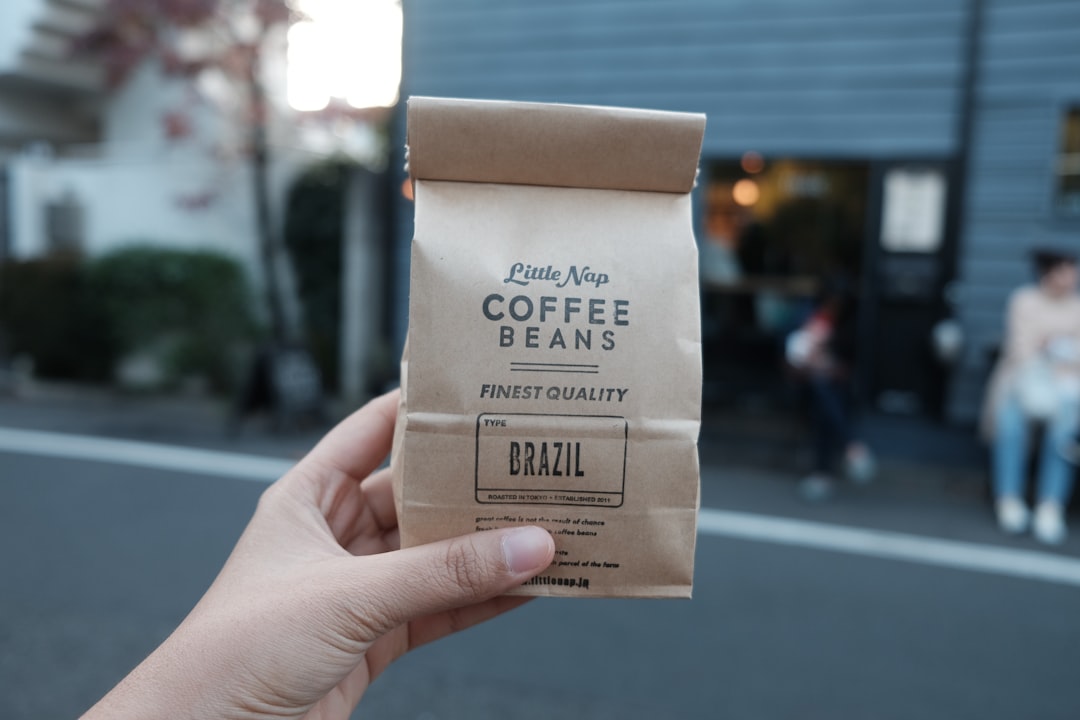
You open a bag labeled “blackberry jam, dark chocolate, honey.” You brew it. You take a sip. You taste nothing but coffee. Maybe a hint of fruit, if you’re feeling generous. You put the cup down, frustrated, and wonder if your palate is broken. It isn’t. The notes on the bag are not a flavor map. They are a marketing tool designed to sell you a story, not a chemical reality.
When you buy a bag of coffee, you are buying a narrative. The roaster has spent months finding the right words to describe the bean’s potential, but those words rarely describe what you will actually experience. This is not a failure of your senses. It is a failure of the language we use to describe coffee.
Specialty coffee relies on a shared vocabulary called the SCA Flavor Wheel. It was designed to give cuppers a standardized way to describe what they taste, moving from broad categories like “fruity” to specific descriptors like “blackberry” or “citrus.” But when a roaster translates that cupping score into marketing copy, the nuance gets flattened. “Blackberry jam” is easier to sell than “high-acidity stone fruit with a honey-like body.” The result is a disconnect between what you expect and what you get.
Understanding this gap is the first step to actually tasting coffee. You do not need a perfect palate. You need a better framework for what you are looking for.
What the Notes Actually Mean
Roasters do not pull tasting notes out of thin air. They come from a formalized cupping protocol, a blind tasting process where professionals score beans based on specific, repeatable criteria. The Specialty Coffee Association (SCA) uses a 100-point scale, and a score of 80 or above qualifies as “specialty grade.” But the score is not the flavor. The score is a measure of consistency, balance, and the absence of defects.
When a roaster writes “chocolate” on a bag, they are not guaranteeing you will taste a Hershey’s bar. They are telling you that, under controlled cupping conditions, the bean exhibited compounds associated with chocolate. This is a chemical association, not a flavor promise. The same bean might taste like dark chocolate to one cupper, like roasted nuts to another, and like nothing at all to you. That is not a flaw in your perception. It is a feature of how human biology processes flavor.
Flavor is a combination of taste (sweet, sour, salty, bitter, umami) and aroma (retronasal olfaction). When you sip coffee, most of what you perceive as “flavor” is actually smell. If you have a cold, or if you are distracted, your brain cannot process the aromatic compounds. The coffee will taste flat, even if the chemistry is perfect. This is why the bag’s notes feel so disconnected from your experience. You are trying to taste a smell.
Why Your Palate Is Not the Problem
Most home brewers are not trained cuppers. They do not spit, they do not slurp aggressively, and they do not score beans on a 100-point scale. They drink coffee to enjoy it, not to analyze it. Expecting to taste “blackberry jam” on the first sip is like expecting to identify every instrument in a symphony on your first listen. You are missing the vocabulary to describe what you are experiencing.
Research into sensory perception shows that flavor identification is highly contextual. A study in the journal Chemical Senses found that people are significantly better at identifying flavors when they are given visual cues or when the flavor is presented in a familiar context (like a fruit). When you taste a coffee labeled “blackberry,” your brain primes itself to look for blackberry. When there is no label, or when the label is misleading, your brain has no reference point. The flavor is there, but it is unanchored.
This is why tasting notes are so frustrating. They give you a specific target (blackberry) that the bean may not actually hit. They create a false expectation. When you do not taste it, you feel like you are doing it wrong. You are not. You are just experiencing the difference between a controlled cupping environment and your morning kitchen.
How to Actually Taste Coffee
If you want to move beyond the marketing and actually taste what is in your cup, you need to change how you approach the brew. Here is a practical protocol that does not require a $200 refractometer or a blindfold.
1. Brew it simply. Use a pour-over or a French press. Avoid milk, sugar, or heavy roasts. You need a clean canvas. A light roast will show you the bean’s true character. A dark roast will mask it with carbon compounds.
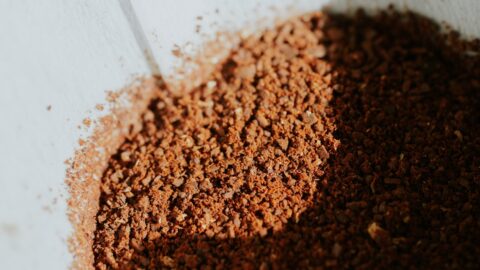
2. Smell the dry grounds. Before you add water, crush the grounds in your hand and smell them. This is your baseline. If the bag says “chocolate,” does the dry smell match? If the bag says “citrus,” does it smell like lemon zest? This is the easiest step to calibrate your expectations.
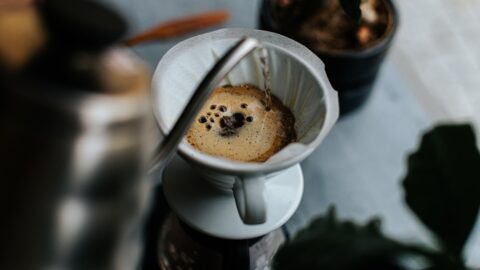
3. Smell the wet grounds. After you pour the water, wait 30 seconds. Break the crust (if using a French press) or smell the surface of the brew. This is where the volatile aromatics are released. This is where the “blackberry” or “chocolate” will actually announce itself.
4. Taste it cold. This is the step most people skip. Hot coffee masks subtle flavors. As the cup cools, the acidity becomes more pronounced, and the fruit notes emerge. If the coffee tastes like nothing when hot, but like blueberry when it reaches room temperature, the bean was never broken. You just needed to wait.
5. Compare side-by-side. Brew two different beans at the same time. One labeled “chocolate,” one labeled “fruit.” Taste them in alternating sips. Your brain is excellent at relative comparison. It will struggle to identify “blackberry” in isolation, but it will easily tell you that Bean A is fruitier than Bean B.
What to Do When the Notes Are Wrong
Sometimes, the roaster is just wrong. Beans vary by harvest, by altitude, by processing method. A bag of coffee bought in January might taste completely different from the same bag bought in June. This is not a defect. It is agriculture.
If the notes on the bag are consistently wrong for you, do not blame your palate. Trust your experience. If a bag says “honey” and you taste “ash,” the roast is likely too dark, or the bean was processed poorly. If it says “floral” and you taste “woody,” the bean may be old, or the roast may be uneven.
The goal is not to match the bag. The goal is to build your own vocabulary. Start with broad categories: Is it sweet? Is it bitter? Is it bright? Is it heavy? Once you can identify those, you can start to narrow down. Is the sweetness like fruit, or like sugar? Is the bitterness like chocolate, or like burnt wood?
Over time, you will develop your own tasting notes. They might not match the bag. They might not match the roaster. That is fine. Your coffee, your palate, your words.
FAQ
Why do coffee bags have tasting notes if they are not accurate?
Tasting notes are a marketing tool derived from professional cupping. They describe the bean’s potential under controlled conditions, not a guaranteed flavor profile for your home brew.
How can I improve my ability to taste coffee?
Brew the coffee simply (light roast, no additives), smell the dry and wet grounds, and taste it as it cools. Cold coffee reveals flavors that heat masks.
Is it normal to taste nothing but “coffee”?
Yes. Without a reference point, your brain cannot categorize the subtle aromatic compounds. This is normal, not a defect.
Should I trust the roaster’s notes?
Use them as a guide, not a guarantee. They indicate the bean’s general character (fruity, nutty, chocolatey), but they do not guarantee you will taste the exact flavor described.
Sources & Further Reading
- SCA Coffee Taster's Flavor Wheel — Specialty Coffee Association
- Chemical Senses: Contextual Flavor Identification — Oxford Academic
Photo by Lex Sirikiat on Unsplash.