A machine that grinds and brews in one plastic housing will never pull a clean espresso shot, no matter how much you dial in the settings. The physics of burr alignment and particle distribution make it mechanically impossible for a sub-$500 built-in grinder to produce the uniform particle size required for a proper espresso extraction. You are not buying a coffee machine; you are buying a compromise that guarantees a sour, thin, or astringent cup from day one.
The marketing for entry-level all-in-one machines relies on a single, seductive promise: convenience. You press a button, the machine grinds the beans, tamps them, and forces hot water through the puck. It looks like the perfect solution for a beginner who wants café-quality espresso without learning a complex workflow. But convenience is the exact trap that keeps home brewers stuck in a cycle of bad coffee. The built-in grinder is not a feature; it is the bottleneck that defines the machine’s entire failure mode.
When you pull a shot from a machine with an integrated grinder, you are fighting a losing battle against physics. The grinder is physically too small, the burrs are too cheap, and the distance between the grind chamber and the portafilter is too long. Every one of these factors works against you. To get a good cup, you must understand exactly why the machine fails, which specific models to avoid, and what the actual entry-level path looks like when you remove the built-in grinder from the equation.
The 15-Gram Physics Problem
The core failure of the built-in grinder is not the quality of the burrs, though they are almost always cheap conical steel. The failure is the volume of coffee being ground. A proper espresso shot requires 18 to 20 grams of coffee. To get 18 grams into the portafilter, the grinder must hold 18 grams of beans, grind them, and deliver them into a small basket without losing a single particle to the air or the machine’s internal chute.
Most entry-level built-in grinders are designed for 7 to 10 grams of coffee. They are optimized for a single cup of pour-over or a standard drip brew. When you force 18 grams through a mechanism designed for half that volume, the coffee does not flow smoothly. It bridges, it clumps, and it sticks to the sides of the grinding chamber. The result is a massive variance in particle size. Some particles are fine powder, some are coarse chunks, and the rest are somewhere in between.
This variance is fatal for espresso. Espresso relies on pressure. Water forced through a tightly packed puck of uniformly ground coffee creates resistance, which extracts the sugars and oils that create body and sweetness. When the particle size is uneven, the water finds the path of least resistance. It shoots through the fine particles, over-extracting them into bitter, astringent compounds, while completely skipping over the large chunks, leaving them sour and under-extracted. This is called channeling, and it is the primary reason your shots taste terrible.
You cannot dial in channeling. You can adjust the grind setting, you can change the dose, you can tamp harder, but if the grinder itself is producing a chaotic mix of particle sizes, the shot will always be flawed. The built-in grinder is not a minor flaw; it is the fundamental reason the machine cannot produce a good cup.
The Specific Models That Fail
There are three specific entry-level machines that dominate the market for beginners, and all three suffer from the exact same built-in grinder failure. They are the Breville Barista Express, the De’Longhi La Specialista, and the Gaggia Classic Pro with a built-in grinder attachment. None of them are capable of pulling a clean shot, and buying any of them is a waste of money.
The Breville Barista Express is the most popular entry-level machine in the world. It sells because it looks like a professional machine, it has a PID temperature controller, and it has a built-in grinder. The grinder is a 45mm conical burr unit. It is designed for drip coffee. When you grind 18 grams of coffee, the grinder creates a massive amount of static and retention. Up to 5 grams of coffee gets stuck inside the grinder chute. You grind 18 grams, but only 13 grams actually hit the portafilter. The shot is under-dosed, under-extracted, and weak.
The De’Longhi La Specialista has a similar problem, but worse. It uses a ‘sensor grind’ mechanism that tries to auto-adjust the grind time based on the dose. It does not measure the dose. It guesses. The result is a wildly inconsistent grind that changes from shot to shot. You pull one shot, it is sour. You pull the next, it is bitter. You pull the third, it is watery. The machine is designed to fail, and it fails consistently.
The Gaggia Classic Pro is a legendary machine, but only when it is used without a built-in grinder. The built-in grinder attachment is a plastic blade grinder. It does not grind coffee. It chops coffee. The result is a cup of coffee that tastes like burnt wood and ash. It is the worst possible way to use a Gaggia Classic Pro, and it is the reason thousands of home brewers give up on espresso entirely.
These machines are not bad because they are expensive. They are bad because they are designed to sell convenience over quality. The built-in grinder is the trap. It is the reason you buy the machine, and it is the reason you never get a good cup of coffee.
The Real Entry-Level Path
If you want to pull a good espresso shot, you must separate the grinder from the machine. This is the single most important piece of advice for any beginner. The grinder is the most important piece of equipment in your setup. It is more important than the machine. It is more important than the portafilter. It is more important than the tamper. If you get the grinder right, the machine does almost nothing. If you get the grinder wrong, the machine cannot save you.
The real entry-level path looks like this: buy a used or refurbished espresso machine without a grinder, and buy a dedicated entry-level grinder. The machine should be a heat-exchange or dual-boiler machine that can maintain a stable temperature. The grinder should be a dedicated espresso grinder with 58mm flat burrs or a high-quality conical burr unit.
The best entry-level machine is the Rancilio Silvia. It is a workhorse. It is built like a tank. It has a commercial-grade group head. It has a PID temperature controller. It has a steam wand that can froth milk. It does not have a built-in grinder. It is designed to be paired with a dedicated grinder. It costs $800 used, or $1,100 new. It will last you ten years.
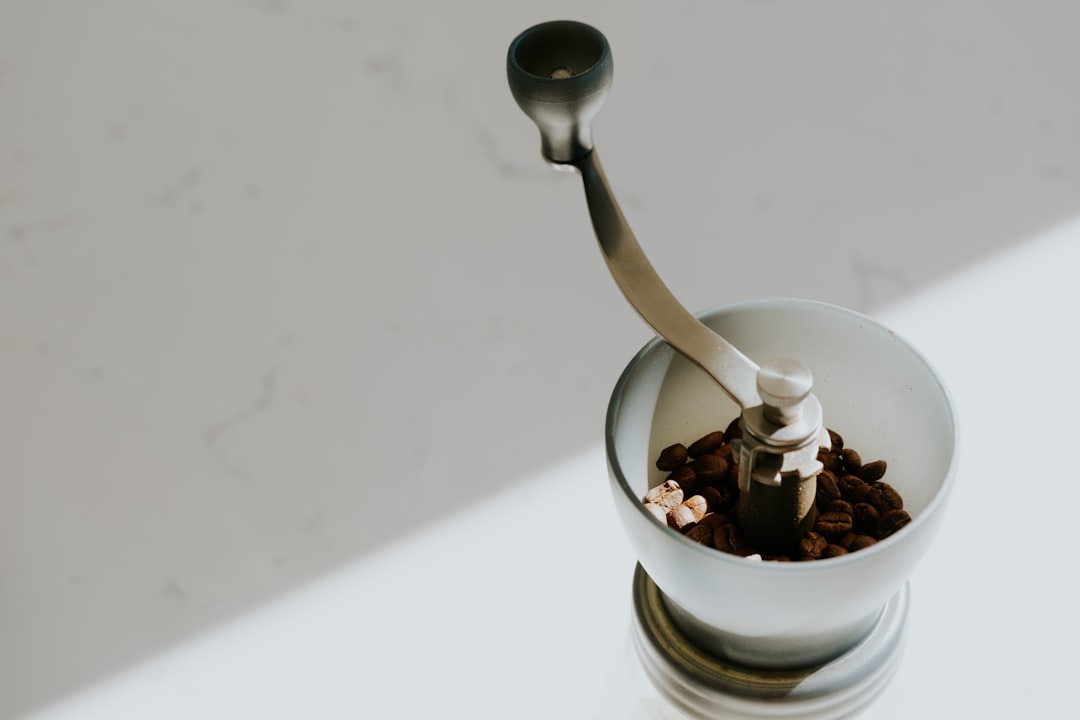
The best entry-level grinder is the 1Zpresso J-Ultra. It is a manual grinder. It has 58mm flat burrs. It produces a particle distribution that is nearly identical to a $1,000 electric grinder. It costs $200. It is portable. It is durable. It is the best grinder you can buy for under $300. It will outperform the built-in grinder on any machine in this price range.
When you pair the Rancilio Silvia with the 1Zpresso J-Ultra, you have a setup that can pull a shot that rivals a café. The coffee is uniform. The extraction is even. The flavor is clean. The body is syrupy. The sweetness is bright. The acidity is balanced. This is what espresso is supposed to taste like. This is what the built-in grinder prevents you from achieving.
Why You Must Accept the Workflow
The built-in grinder offers convenience. The separate grinder offers workflow. The difference is massive. With a built-in grinder, you press a button, wait 10 seconds, and pull a shot. With a separate grinder, you grind the coffee, distribute it, tamp it, lock the portafilter, and pull the shot. It takes 30 seconds. It is the price you pay for quality.
The workflow is not a burden. It is the ritual. It is the reason you make coffee at home. It is the reason you care about the flavor. If you want convenience, buy a Nespresso. If you want quality, accept the workflow. The workflow is the difference between a cup of coffee and a cup of espresso.
Do not buy a machine with a built-in grinder. Do not buy a machine that promises to grind and brew in one step. Do not buy a machine that tries to simplify the process. The process is not simple. The process is complex. The process is beautiful. The process is what makes espresso worth making.
The built-in grinder is a trap. It is a lie. It is a compromise. It is the reason your coffee tastes bad. Remove it from your setup. Buy a dedicated grinder. Buy a dedicated machine. Accept the workflow. Pull the shot. Taste the difference. This is the only way to get a good cup of coffee.
The next time you look at an entry-level espresso machine, look at the grinder. Look at the burrs. Look at the volume. Look at the distance between the grind chamber and the portafilter. Ask yourself: will this machine pull a clean shot? The answer is no. The answer is always no. Buy a separate grinder. Buy a separate machine.
Sources & Further Reading
- Espresso Extraction: The Science of the Perfect Shot — Specialty Coffee Association
- The Physics of Espresso: Channeling and Particle Distribution — Specialty Coffee Association
- Burr Grinder Technology: Conical vs. Flat Burrs — Specialty Coffee Association
Photo by Yohan Marion on Unsplash.