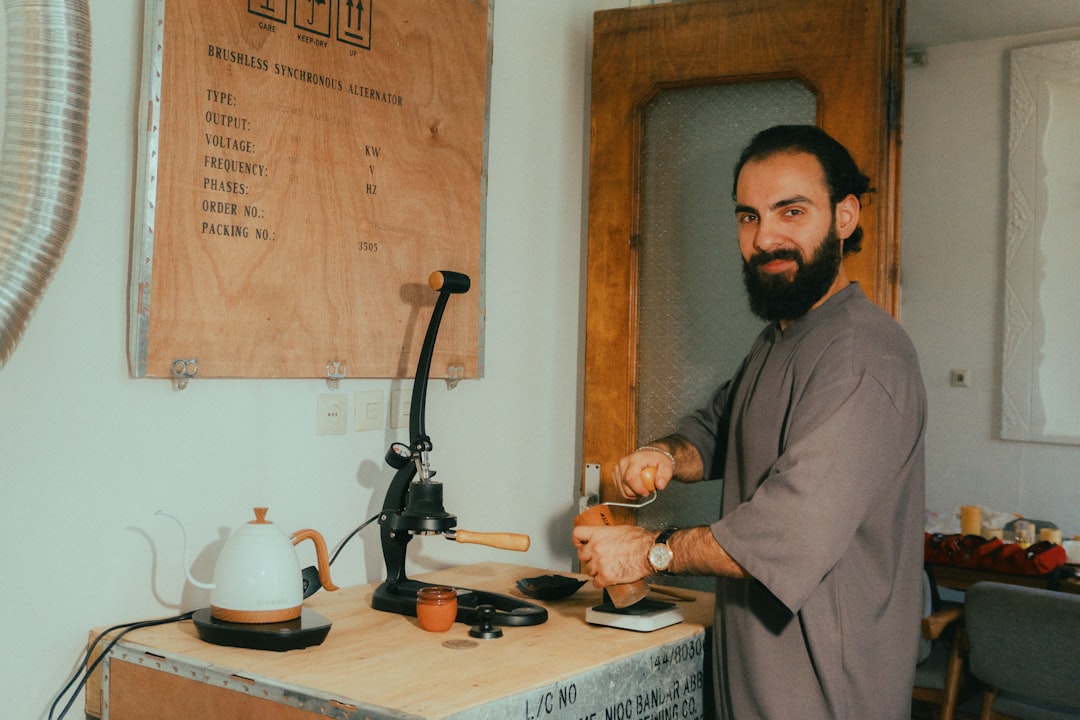
You are standing in a coffee supply store, or scrolling through a late-night browser tab, staring at a wall of machines that all promise café-quality coffee for under $500. You pick up a shiny silver machine, turn it over, and see the grinder built right into the top. It looks convenient. It looks complete. It looks like the perfect place to start. Then you remember a friend’s advice: don’t buy a machine with a built-in grinder. So you put it down, pick up another one, and realize you have no idea what to do next. You are not looking for a coffee machine. You are looking for a system that will not waste your money.
Here is the reality of the best entry level espresso setup: it is a separate grinder paired with a basic machine. The grinder is the bottleneck that breaks beginners, and buying a machine with a built-in blade or burr grinder is the single most expensive mistake you can make in this hobby.
The reason is simple physics. Espresso requires a grind size so fine it resembles powdered sugar, with a particle distribution so narrow that every single particle extracts at the exact same rate. A $100 machine with a $30 built-in grinder cannot achieve this. The burrs are too small, the motor is too weak, and the alignment is too loose. You will get channeling, bitterness, and a shot that tastes like ash. To fix this, you must decouple the grinding from the brewing. You buy a dedicated entry-level burr grinder, and you pair it with a basic, manual-lever espresso machine.
Why Built-In Grinders Fail at 15 Grams
When you buy an entry-level espresso machine with a built-in grinder, you are buying a compromise. The grinder is an afterthought, designed to fit into a small footprint, not to perform a precise mechanical task. The burrs are tiny, often made of cheap steel or ceramic, and they spin too slowly. This creates heat and uneven particle sizes. In espresso, where you are packing 15 to 18 grams of coffee into a tiny puck, uneven particles are fatal.
Large particles (boulders) do not extract enough, leaving sour, acidic notes. Fine particles (fines) over-extract, leaving bitter, astringent notes. When these two exist in the same basket, the water finds the path of least resistance, rushing through the fines and channeling straight through the boulders. The result is a cup that is simultaneously sour and bitter. It is the worst of both worlds. This is why built-in grinders on entry-level espresso machines fail at 15 grams. The physics of particle distribution makes clean extraction impossible with that hardware.
The solution is to buy a dedicated grinder that handles the 15-gram dose. This is the first step in building the best entry level espresso setup. You do not need a $500 grinder. You need a $200 grinder that uses flat or conical burrs made of hardened steel, driven by a motor that spins fast enough to grind 15 grams in under 10 seconds without heating the beans. This decouples the two variables. You can now adjust the grind without worrying about the machine’s temperature or pressure.
The Grinder Bottleneck That Breaks Beginners
Beginners fail because they think the machine makes the espresso. It does not. The grinder makes the espresso. The machine merely forces hot water through the puck. If the puck is not prepared correctly, the machine cannot save it. This is the grinder bottleneck that breaks beginners. They buy a $400 machine, pair it with a $50 built-in grinder, and spend months trying to dial in shots that are physically impossible to pull.
The bottleneck is particle distribution. A good grinder produces a tight distribution of particles, all within a few microns of each other. A bad grinder produces a bimodal distribution: a mix of fine powder and large chunks. In pour-over, this does not matter as much, because the water flows through slowly, giving the boulders time to extract. In espresso, the water is forced through under pressure in 25 to 30 seconds. The boulders never have time to extract, and the fines turn to mud. The result is a thin, watery shot that tastes harsh.
To break this bottleneck, you must prioritize the grinder over the machine. The best entry level espresso setup starts with the grinder, not the machine. You buy a grinder that can produce a fine, consistent grind. Then, you buy a machine that can handle the pressure and temperature stability required for that grind. This reverses the standard purchasing logic, but it is the only way to get a good cup without spending $1,000 on a machine.
Specific Entry-Level Machine Models Worth Buying
Once you have a dedicated grinder, you can look at the machines. The goal here is not to find the most feature-rich machine, but the most reliable, repairable, and thermodynamically stable machine under $500. There are three models that consistently deliver the best results for beginners.
The Gaggia Classic Pro is the most popular entry-level machine for a reason. It uses a commercial-style 58mm portafilter, which means you can buy affordable, high-quality accessories and spare parts. It has a brass boiler, which holds heat better than aluminum, and a commercial-style pump that provides steady pressure. The downside is that it is a single boiler, so you have to wait for the water to heat up between brewing and steaming. But for a beginner, this is not a problem. It forces you to slow down and focus on the shot.
The Rancilio Silvia is the Gaggia’s bigger, heavier brother. It has a larger boiler, which means better temperature stability for back-to-back shots. It also uses a 58mm portafilter. The downside is that it is heavier, more expensive, and the stock steam wand is mediocre. But the core brewing performance is excellent, and it is built like a tank. If you plan to make more than one cup at a time, this is the better choice.
The Breville Barista Express is the only machine on this list with a built-in grinder. You might be wondering why it is here, given everything I just said. It is here because it is the only built-in grinder machine that actually works. The grinder is decent, the machine is stable, and it is a complete package. But it is still a compromise. The grinder is not as good as a dedicated $200 grinder, and the machine is not as repairable as the Gaggia. If you want a complete package and do not want to buy two separate pieces of equipment, this is the only one worth buying. But if you want the best entry level espresso setup, buy the Gaggia or the Silvia, and pair them with a dedicated grinder.
Dedicated Entry-Level Grinders That Actually Work
These are the grinders you should pair with the machines above. They are all under $250, and they all produce a grind fine enough for espresso. They are not perfect, but they are the best you can get at this price point.
The Baratza Encore ESP is the most popular dedicated espresso grinder for beginners. It uses 40mm conical burrs, which are small but effective. It has 40 grind settings, which is enough to dial in most beans. The downside is that it is slow, and the grind distribution is not as tight as higher-end grinders. But for a beginner, it is the perfect starting point. It is easy to use, easy to clean, and easy to repair.
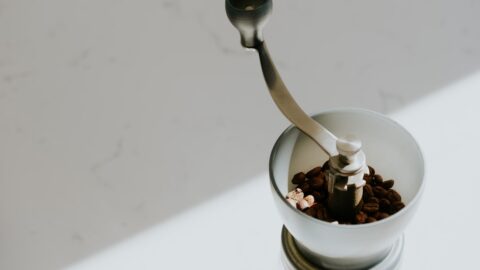
The 1Zpresso J-Ultra is a manual hand grinder that punches way above its weight. It uses 48mm conical burrs, which are larger than the Baratza’s, and it produces a grind distribution that is surprisingly tight for a manual grinder. The downside is that it takes effort to grind 15 grams of coffee. But the quality of the grind is excellent, and the machine is built like a tank. If you do not want to spend $200 on an electric grinder, this is the best alternative.
The Comandante C40 MK4 is another manual hand grinder that is highly regarded. It uses 45mm conical burrs, and it produces a very clean, consistent grind. The downside is that it is expensive for a manual grinder, and it is slow. But if you want the best possible grind quality at the lowest price, this is it. It is a lifetime investment, and it will serve you well for years.
How to Build Your First Setup
Here is the exact recipe for the best entry level espresso setup. You buy a dedicated grinder, and you pair it with a basic machine. Do not buy a machine with a built-in grinder, unless it is the Breville Barista Express. Do not buy a $1,000 machine. Do not buy a $50 machine. Buy the Gaggia Classic Pro or the Rancilio Silvia, and pair it with the Baratza Encore ESP or the 1Zpresso J-Ultra. This will cost you around $600 to $700 total. It is the cheapest way to get a café-quality cup of coffee at home.
Once you have the equipment, you must learn to dial in your shots. This means adjusting the grind size, the dose, and the yield until you get a shot that tastes balanced. It takes time, and it takes practice. But it is the only way to learn. Do not rush it. Do not buy more equipment. Do not buy a $2,000 machine. Master the basics first. Then, if you want to upgrade, you can. But for now, this is the best entry level espresso setup. It is simple, it is effective, and it is the only way to avoid wasting your money.
FAQ
Can I use a pour-over grinder for espresso?
No. Pour-over grinders are designed to produce a coarse, uneven grind. Espresso requires a fine, even grind. Using a pour-over grinder for espresso will result in a sour, watery shot.
Is a 58mm portafilter necessary?
No, but it is highly recommended. A 58mm portafilter is the commercial standard, which means you can buy affordable accessories and spare parts. A 51mm or 54mm portafilter will limit your upgrade path.
How much coffee should I use for a single shot?
15 to 18 grams. This is the standard dose for a single basket. Do not use less than 14 grams, or you will get channeling. Do not use more than 18 grams, or you will get a thick, bitter shot.
What is the ideal brew time for espresso?
25 to 30 seconds. This is the time it takes for the water to pass through the puck. If it takes less than 20 seconds, your grind is too coarse. If it takes more than 35 seconds, your grind is too fine.
Do I need a scale?
Yes. You need a scale that measures in 0.1 grams. You need to measure the dose (the weight of the dry coffee) and the yield (the weight of the liquid espresso). Without a scale, you are guessing. Guessing is not a strategy.
Sources & Further Reading
- Gaggia Classic Pro — Gaggia
- Rancilio Silvia Espresso Machine — Rancilio
- Baratza Encore ESP Coffee Grinder — Baratza
- 1Zpresso J-Ultra Manual Coffee Grinder — 1Zpresso