The Gaggia Classic Pro’s Thermostat Is a Safety Valve. The W11 PID Makes It an Instrument.
The Gaggia Classic Pro is a machine that brews coffee at 93°C, steams milk at 126°C, and forces you to wait four minutes between the two. You are paying for a commercial-grade pump and a copper boiler, but you are using it like a toy. The single-boiler design is not a feature. It is a thermodynamic trap that turns a capable machine into a workflow nightmare.
Upgrading the W11 PID controller does not fix the boiler. It fixes the temperature. By replacing the factory’s crude mechanical thermostat with a programmable microcontroller, you gain independent temperature profiling for brewing and steaming. You stop guessing. You stop waiting. You start pulling shots that actually taste like the beans you bought.
This is not a cosmetic upgrade. It is the only hardware modification that addresses the root cause of the Gaggia Classic’s reputation for inconsistency. If you are brewing at home and your shots taste sour one day and bitter the next, the problem is not your grind. It is the machine’s inability to hold a stable temperature while the boiler recovers from steam.
How the Single-Boiler Bottleneck Breaks Your Shot
To understand why the W11 controller matters, you have to understand what the factory thermostat actually does. The Gaggia Classic uses a simple bimetallic strip that opens and closes a circuit based on the temperature of the water at the bottom of the boiler. When the water hits roughly 130°C, the thermostat clicks off. The heating element stops. The water cools. When it drops to 115°C, the thermostat clicks back on and the element fires up again.
This creates a massive 15°C oscillation window. Your brewing temperature is constantly swinging between 115°C and 130°C. For espresso, this is catastrophic. You need a stable 90°C to 96°C range to extract the sugars and acids in balance. When the water is at 130°C, you are scalding the grounds, pulling out harsh, astringent compounds that ruin the cup. When it drops to 115°C, you are under-extracting, leaving the shot sour and thin.
But the real problem is what happens when you steam. To get enough pressure to texture milk, the boiler must reach 126°C. This is the maximum operating temperature of the machine. Once you finish steaming, the boiler is at its peak. To brew, you have to wait for the water to cool down to a usable range. This cooling phase takes three to five minutes. During that wait, the heating element cycles on and off, fighting the cooling water, creating thermal shock to the copper, and giving you absolutely no control over the final temperature.
The factory thermostat does not know what temperature you want to brew at. It only knows when to stop the boiler from boiling over. It is a safety device, not a precision instrument. By replacing it with the W11 PID, you decouple the brewing temperature from the steaming temperature. You set the brew temperature to exactly 93°C. The machine will maintain that temperature within a fraction of a degree, regardless of what the boiler is doing for steam. You no longer wait. You brew immediately. You steam immediately. The machine handles the rest.
What the W11 Controller Actually Changes
The W11 PID controller replaces the single mechanical thermostat with a programmable digital interface. It uses a highly accurate thermistor probe to read the water temperature in real time, feeding that data to a microcontroller that modulates the heating element’s power output. This is not a simple on-off switch. It is a proportional-integral-derivative algorithm that adjusts the power delivery to keep the water exactly where you set it.
The difference between a 15°C swing and a 0.5°C swing is the difference between a sour shot and a balanced cup. When the water temperature is stable, your grind size becomes the primary variable for extraction. You stop chasing temperature to fix flavor, and you start dialing in the grind. This is the single most important shift in workflow for any home barista.
The W11 controller also gives you the ability to set independent temperatures for brewing and steaming. You can set the brew temperature to 92°C for a bright, acidic Ethiopian natural, and the steam temperature to 126°C for texturing milk. The machine will hold the brew temperature perfectly while you steam, because the PID modulates the power to maintain the target. You do not have to wait. You do not have to guess. You pull the shot, you steam the milk, and you combine them. The workflow matches the machine’s capabilities.
This is not just about convenience. It is about extraction science. The Specialty Coffee Association’s brewing standards require a water temperature between 90°C and 96°C for optimal extraction. The factory Gaggia Classic Pro violates this standard by design. The W11 controller enforces it. By holding a stable temperature, you ensure that the solubles are extracted at a consistent rate, reducing the chance of channeling and uneven extraction. The result is a cup that tastes like the bean, not like the machine’s limitations.
The Installation Is Harder Than the Upgrade Itself
If you are considering this upgrade, you need to understand that installing the W11 controller is not a simple plug-and-play task. It requires opening the machine, disconnecting the power, and replacing the factory thermostat with a custom-wired PID unit. The wiring diagram is specific, and a single mistake can fry the controller or, worse, the machine’s main board.
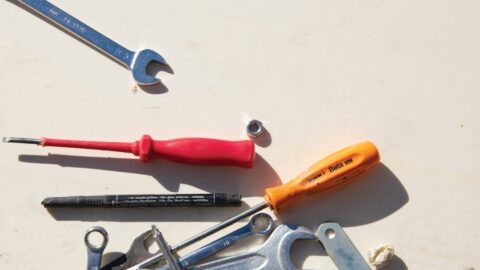
You will need a multimeter, a soldering iron, and a steady hand. The process involves removing the top panel, disconnecting the power cord, and desoldering the factory thermostat’s wires. You will then need to solder the new thermistor probe and the PID controller’s relay wires to the correct terminals. The W11 controller comes with a detailed wiring diagram, but it assumes you know how to read a schematic and how to make a clean solder joint.
The hardest part is not the wiring. It is the physical fit. The W11 controller is slightly larger than the factory thermostat, and you will need to drill new mounting holes in the boiler’s brass housing. This requires precision, because drilling into the boiler incorrectly can compromise the seal and cause a leak. Many users choose to have a professional install the controller, which costs around $150 to $200 on top of the $80 to $100 cost of the controller itself.
This is a significant investment. You are spending nearly $300 on a machine that retails for $700. But you are not buying a new machine. You are fixing the one you already own. The Gaggia Classic Pro is built like a tank. The copper boiler is thick, the pump is powerful, and the frame is solid. The only thing holding it back is the factory thermostat. The W11 controller removes that bottleneck, turning a broken machine into a capable one.
When the W11 Upgrade Is Not Worth It
There are two scenarios where the W11 controller upgrade is a waste of money. The first is if you only brew filter coffee. The Gaggia Classic Pro is capable of brewing filter coffee, but it is not designed for it. The single boiler means you have to wait for the water to cool down, and the lack of a dedicated filter coffee port means you have to use the group head. If you only brew filter, buy a dedicated filter coffee machine. It will be cheaper, faster, and better.
The second scenario is if you are a professional barista. The Gaggia Classic Pro is not a commercial machine. It lacks the thermal stability, the water capacity, and the durability to handle 50 shots a day. If you are running a café, buy a commercial machine. The W11 controller will not fix the fundamental limitations of a single-boiler design under heavy use.
For the home barista, however, the W11 controller is the single most impactful upgrade you can make. It transforms the Gaggia Classic Pro from a novelty item into a serious tool. It gives you control. It gives you consistency. It gives you the ability to pull shots that taste like the beans you bought, not like the machine’s limitations. If you are serious about espresso, this is the upgrade you need.
The Real Cost of Waiting
The Gaggia Classic Pro’s single boiler is a thermodynamic compromise. It forces you to choose between brewing and steaming. The W11 controller does not remove that compromise, but it minimizes the damage. By holding a stable brewing temperature, it allows you to pull shots consistently, regardless of what the boiler is doing for steam. You stop waiting. You stop guessing. You start brewing. This is not a cosmetic upgrade. It is a fundamental fix for a fundamental flaw. If you are brewing at home and your shots taste inconsistent, the problem is not your grind. It is the machine’s inability to hold a stable temperature. The W11 controller fixes that. It is the only hardware modification that addresses the root cause of the Gaggia Classic’s reputation for inconsistency. If you are serious about espresso, this is the upgrade you need.
Sources & Further Reading
- Specialty Coffee Association: Third Wave Coffee Standards — Specialty Coffee Association
- Espresso Extraction: The Science of the Perfect Shot — Trends in Food Science & Technology
Photo by Samuel Field on Unsplash.