Blackcurrant is a marketing term. It sits on the bag, it sits on the menu, it sits in every third blog post about Kenyan coffee, and it means exactly nothing to the person trying to dial in a 1:16 ratio at 93°C. The real story of Kenyan AA is not fruit-forward flavor. It is a structural acidity that most home brewers mistake for sourness and under-extract, then reach for a finer grind to fix the wrong problem.
Kenyan AA is not a single flavor profile. It is a high-altitude growing environment, a specific processing method, and a varietal (mostly SL28 and SL34) that produces a cup with a sharp, wine-like acidity and a clean, almost tea-like body. The AA designation is a screen size, not a quality grade. It means the beans passed through a 2.40 mm sieve. Beans that passed a 2.25 mm sieve are called PB (Peaberry) or just AA, depending on the exporter. The flavor you get depends entirely on how the farmer processed the cherry, how high the farm grew, and whether the roaster understood that Kenyan beans need a slower, longer roast to develop the sugars before the acids break down.
Most home brewers pull a Kenyan AA pour-over too fine. They taste the bright, sharp acidity, assume it’s under-extraction, and grind finer. The result is a cup that is both sour and bitter, with astringency from over-extracted tannins masked by under-extracted sugars. The fix is not a finer grind. The fix is a coarser grind, a slightly longer brew time, and a water temperature that sits closer to 90°C than 96°C. Kenyan AA demands a slower, gentler extraction because the bean’s structure is dense, the sugar development is shallow, and the acids are volatile.
How Kenyan AA Actually Processes
Kenyan coffee is almost always washed, but the washing protocol is unique. Kenyan farmers use a double-fermentation process that lasts 18 to 48 hours, depending on altitude and temperature. The cherries are pulped, fermented in water, washed, and then fermented again in clean water for a second period. This double fermentation is what gives Kenyan coffee its signature clean, bright acidity. It also means the bean is more porous, more reactive to roast profiles, and more sensitive to brew variables than a standard washed bean from Colombia or Brazil.
The double fermentation breaks down the mucilage more aggressively than a single fermentation. It leaves the bean with a higher concentration of citric and malic acids, which are the compounds responsible for that sharp, wine-like acidity. It also means the bean has less residual sugar on the surface, which makes it easier to scorch during roasting and harder to extract during brewing if you treat it like a standard washed bean. If you pull a Kenyan AA like a Colombian Huila, you will get a cup that tastes thin, sharp, and astringent. You will blame the bean. The bean is fine. Your extraction is wrong.
Why Roasting Changes Everything
Kenyan AA beans are dense, hard, and full of volatile acids. A standard medium roast will burn the sugars on the surface before the interior develops, leaving you with a cup that tastes ashy and sour. A proper Kenyan roast is slower, with a longer first crack and a deliberate pause before second crack. The roaster is trying to drive the sugars to the surface without scorching the bean, while preserving the volatile acids that give the coffee its character. If the roaster is inexperienced, or if they are trying to hit a color target on a Agtron scale, they will roast it too light. The result is a cup that tastes like blackcurrant extract and nothing else. No body, no sweetness, no balance.
Look at the bean at the end of the roast. A properly roasted Kenyan AA should be a medium-dark brown, with a dry, matte surface. If the bean is light brown, with a shiny, oily surface, the roaster pulled it too early. The oils are trapped inside, the sugars are under-developed, and the acids are raw. If the bean is dark brown, with a black, oily surface, the roaster let it sit in second crack too long. The acids are broken down, the sugars are carbonized, and the cup tastes bitter and ashy. A properly roasted Kenyan AA is a medium-dark brown, with a dry, matte surface, and a slight sheen of oil only visible under direct light.
How to Brew Kenyan AA Without Breaking It
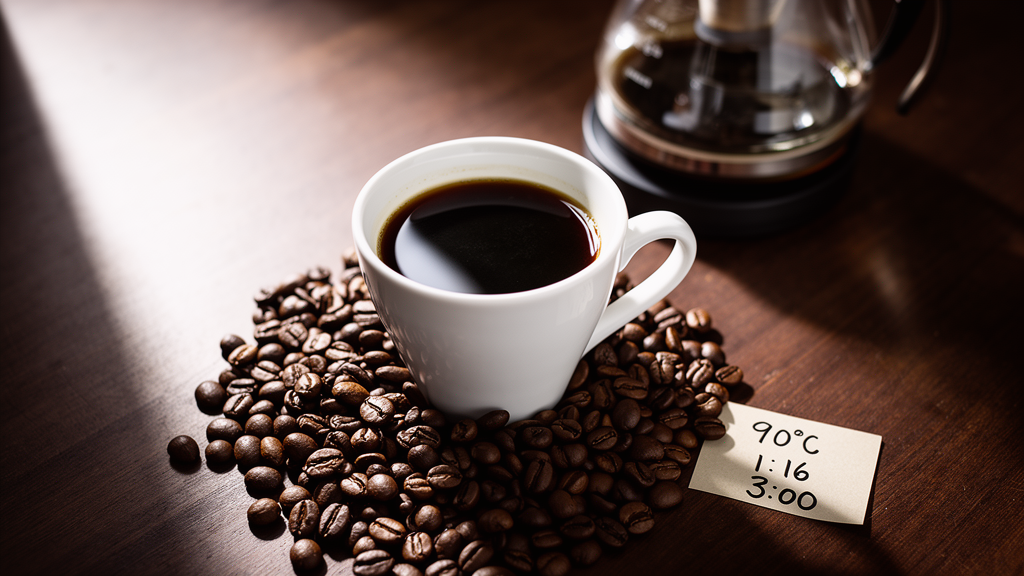
Start with a 1:16 ratio. Use 15 grams of coffee to 240 grams of water. Grind slightly coarser than your standard pour-over grind. If you normally grind at 12 clicks on a Comandante C40, grind at 13 or 14. Use water at 90°C, not 96°C. Pour slowly, in concentric circles, avoiding the edges of the filter. Let the bloom sit for 30 seconds. Then pour the remaining water in two slow, steady pours, letting the water drain completely before the second pour. Total brew time should be 3:00 to 3:30. If the cup tastes sharp and astringent, grind coarser next time. If it tastes thin and watery, grind finer. If it tastes balanced, with a clean acidity and a tea-like body, you nailed it.
Why This Matters for Home Brewers
Kenyan AA is not a novelty bean. It is a structural challenge that forces you to understand extraction, roast profiles, and brewing variables at a deeper level. If you can dial in a Kenyan AA, you can dial in almost any high-acid, high-altitude bean. It teaches you to taste the difference between under-extraction and high acidity, to recognize the signs of a poorly roasted bean, and to adjust your brew variables with intention instead of guesswork. It is not about finding the perfect blackcurrant flavor. It is about understanding the mechanics of a high-acid, high-altitude bean, and learning how to extract it without breaking it.
FAQ
Is Kenyan AA actually blackcurrant?
No. Blackcurrant is a marketing term. The actual flavor profile is a sharp, wine-like acidity with a clean, tea-like body. The acidity is structural, not fruity.
Why does my Kenyan AA taste sour?
You are likely grinding too fine and using water that is too hot. Kenyan AA needs a coarser grind, a longer brew time, and water at 90°C, not 96°C. The sharp acidity is not under-extraction. It is the bean’s natural structure.
What grind size should I use for Kenyan AA?
Grind slightly coarser than your standard pour-over grind. If you normally use 12 clicks on a Comandante C40, try 13 or 14. The bean is dense and reactive, so a coarser grind prevents over-extraction of tannins.
How do I know if my Kenyan AA is roasted correctly?
A properly roasted Kenyan AA is a medium-dark brown, with a dry, matte surface. If the bean is light brown and shiny, it was pulled too early. If it is dark brown and oily, it was roasted too long. Look for a dry, matte finish with a slight sheen only under direct light.