In 2019, Matt Perger walked onto the World Barista Championship stage with a recipe that defied three decades of home-brewing dogma. He didn’t just stir his coffee. He attacked it. For years, the AeroPress community had been treating the device as a passive steeping vessel, obsessing over immersion time, 1:30, 2:00, 2:30, as if the clock were the primary dial for flavor. Perger demonstrated that a vigorous, thirty-second stirring phase extracted more clarity and sweetness than a passive, two-minute steep. The result was not just a new technique; it was a fundamental shift in how home brewers understood the relationship between mechanical energy and chemical extraction. The spoon was no longer a tool for mixing. It was the primary extraction variable.
Most home brewers treat the AeroPress Standard Method as a passive steeping device. You add water, wait, press, and drink. This approach works perfectly fine for a quick cup of coffee, but it leaves a massive amount of flavor potential on the table. The AeroPress is not a French press wearing a paper filter. It is a pressurized immersion vessel that responds violently to agitation. When you stir, you are not just moving particles around. You are actively stripping solubles from the bean surface, overriding the diffusion limits that passive steeping imposes, and creating a flavor profile that is brighter, cleaner, and significantly more complex than a standard brew.
Why Passive Steeping Fails High-Altitude Beans
Passive immersion brewing relies entirely on diffusion. Water molecules slowly penetrate the coffee grounds, dissolving soluble compounds as they go. This process is slow, predictable, and inherently limited by the concentration gradient between the water and the coffee particles. For dense, high-altitude beans, this is a fatal flaw. Those beans are packed with structural sugars and complex acids that require mechanical energy to release. If you rely solely on time, you will extract the surface solubles quickly, then stall out, leaving the dense core of the particle untouched. The result is a cup that tastes thin, sour, or underdeveloped, no matter how long you let it sit.
Agitation solves this by constantly refreshing the boundary layer around each coffee particle. In fluid dynamics, a boundary layer is a thin film of saturated liquid that clings to a solid surface. As water dissolves compounds from the coffee, it becomes saturated with those compounds. Once saturated, it stops extracting. In a passive brew, that saturated water sits against the particle, blocking further extraction. Stirring breaks that boundary layer, replacing the saturated water with fresh, unsaturated water. This allows the extraction to continue at a much higher rate, pulling out the complex sugars and acids that define a high-quality cup. The difference is not subtle. It is the difference between a cup that tastes like weak tea and a cup that tastes like the bean it came from.
The Mechanics of the Stir Phase
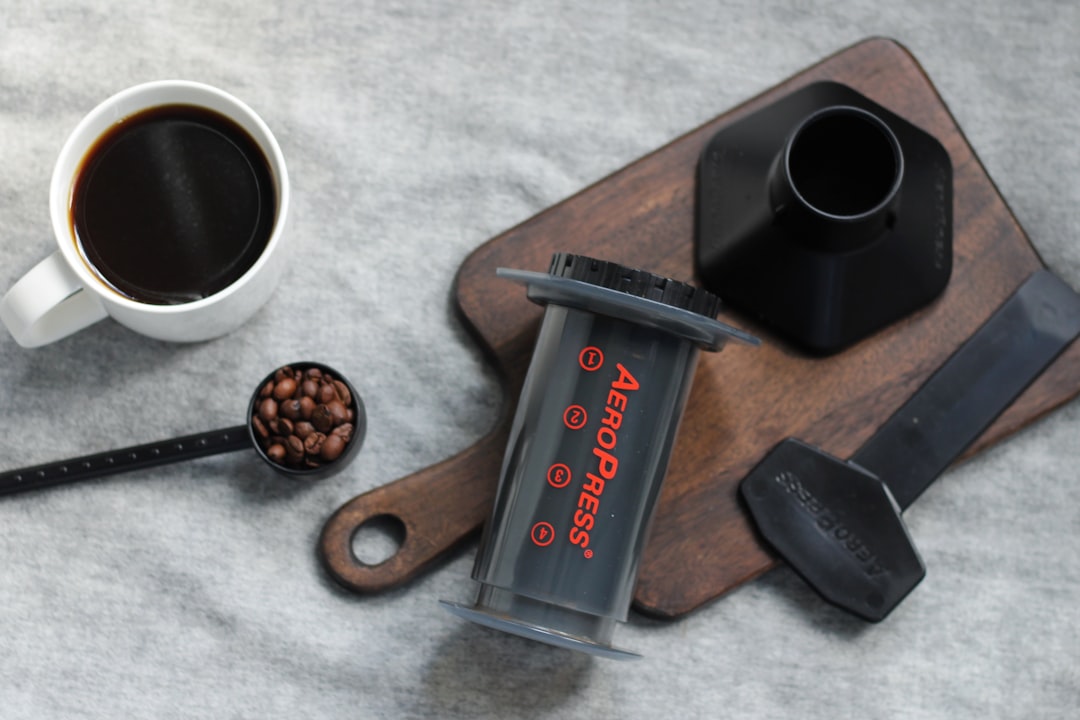
The standard recipe calls for 15 grams of coffee and 200 grams of water, brewed for 1:30 to 2:00 minutes. The critical variable is the first 30 seconds. This is not a gentle swirl to wet the grounds. This is a deliberate, aggressive stirring phase designed to maximize extraction efficiency. Use a sturdy spoon, like the included plastic stirrer or a dedicated metal stirring tool, and move it in a figure-eight pattern. Do not scrape the bottom or sides aggressively enough to damage the filter, but move with enough force to create a visible vortex. The goal is to ensure every single particle is exposed to fresh water immediately after the initial bloom.
Why figure-eight? A circular motion tends to create a vortex that pulls water from the center and pushes it to the edges, leaving dead zones near the walls of the chamber. A figure-eight motion forces water across the entire cross-section of the brew chamber, ensuring uniform distribution of energy and temperature. This is not about speed. It is about coverage. If you stir for 30 seconds and still see dry pockets of coffee clinging to the upper walls, you are not stirring correctly. The water should be opaque, dark, and uniformly mixed. This visual cue is your best indicator that you are extracting the full spectrum of the bean.
Agitation vs. Time: The Real Control Lever
Most brewers obsess over brew time because it is easy to measure. You set a timer, you wait, you press. It feels scientific. But time is a lagging indicator of extraction. Agitation is the leading indicator. If you stir vigorously for 30 seconds, you will extract more solubles in that minute than you will in the next 90 seconds of passive steeping. This means you can achieve a higher extraction yield in a shorter total brew time. A 1:30 brew with aggressive stirring will often taste more balanced and complex than a 2:30 passive brew, even though the latter has more total contact time. This is counter-intuitive for anyone coming from a French press background, but it is the fundamental mechanic of the AeroPress.
This shift in understanding changes your entire dial-in protocol. Instead of grinding finer to increase extraction time, you should grind slightly coarser and rely on agitation to pull the flavor. A coarser grind reduces the risk of over-extracting fines, which cause bitterness and astringency, while the aggressive stirring ensures you still pull enough sweetness and clarity. The result is a cup that is clean, bright, and syrupy, without the harsh edges that often plague immersion brews. This is why the AeroPress has become the preferred brewing method for competition baristas. It offers the control of a pour-over with the body of a French press, and the key to unlocking that control is the spoon.
When Agitation Goes Wrong
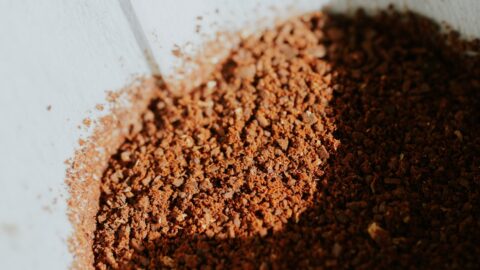
Agitation is powerful, but it is not magic. If you stir too aggressively, or for too long, you will extract compounds that belong in the trash. Over-stirring pulls out excessive tannins and bitter phenols, creating a cup that is harsh, dry, and astringent. The boundary between clarity and bitterness is thin. It is defined by the duration and intensity of your stir. If you are new to this method, start with 20 seconds of stirring. Taste the result. If it tastes thin or sour, increase to 30 seconds. If it tastes bitter or dry, drop to 15 seconds. Do not adjust your grind size until you have mapped the stirring range. Your grind should be set to a medium-fine setting, roughly where table salt sits, and your stirring time should be your primary dial.
Another common mistake is using the wrong tool. The plastic stirrer included with the AeroPress is designed to fit snugly inside the chamber, but it is thin and flexible. It does not move enough water to create the necessary vortex. A dedicated metal stirring tool, or even a sturdy teaspoon, will move more mass and create a more effective boundary-layer disruption. This is not about buying gear for the sake of buying gear. It is about matching the tool to the physics of the brew. If you are using a flimsy plastic stick, you are actively limiting your extraction potential. Upgrade your stirring tool, and you will immediately notice a difference in clarity and body.
The Original Contribution: The Stir-to-Brew Ratio
Here is the practical test that most recipes skip: the Stir-to-Brew Ratio. Instead of treating stirring and steeping as separate phases, treat them as a single, continuous extraction event. Calculate the ratio of stirring time to total brew time. A 30-second stir in a 1:30 brew is a 1:3 ratio. The higher the ratio, the more the brew relies on mechanical energy rather than time. Most home brewers operate at a ratio of 1:8 or lower, relying almost entirely on time. By pushing your ratio to 1:3 or 1:4, you force the brew to rely on agitation, which pulls a different set of solubles. This ratio is your new dial. Adjust it to move between clarity and body. A higher ratio pulls more acidity and clarity. A lower ratio pulls more body and sweetness. This is not a vague suggestion. It is a measurable, repeatable framework for dialing in your AeroPress.
Why This Matters for Your Daily Cup
The AeroPress Standard Method with aggressive stirring is not a competition trick. It is the most effective way to brew coffee at home. It transforms a simple immersion brew into a highly controlled extraction event, giving you the ability to pull out the complex flavors of high-altitude beans without the bitterness of over-extraction. It is fast, it is consistent, and it is reproducible. If you are still relying on passive steeping, you are leaving 30% of the flavor on the table. Pick up a spoon, stir vigorously for 30 seconds, and taste the difference. Your coffee will never taste the same again.
Sources & Further Reading
- The 2019 World Barista Championship Recipe: Matt Perger — World Barista Championship
- Specialty Coffee Association: Brewing Standards — Specialty Coffee Association
Photo by Elin Melaas on Unsplash.