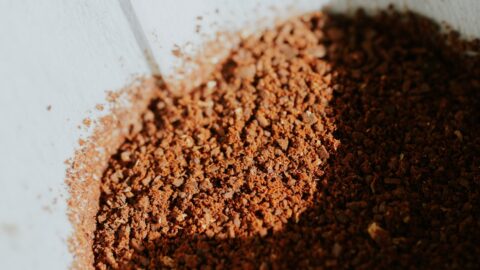
You are grinding too evenly. That is why your coffee tastes clean, bright, and fundamentally empty. The entire modern pour-over movement is built on the assumption that a burr grinder produces a uniform particle distribution, and that the finer you grind, the more extraction you get. This is the single most expensive misconception in home brewing. A burr grinder does not produce a uniform grind. It produces a distribution of particles that is inherently skewed toward fines, and your attempt to eliminate those fines by buying a more expensive grinder is the exact reason your cup lacks body.
When you buy a high-end conical burr grinder, you are buying a machine designed to crush beans between two abrasive surfaces. The result is not a collection of identical coffee particles. It is a chaotic spectrum ranging from microscopic dust to large, under-extracted chunks. The industry standard for measuring this distribution is the Specialty Coffee Association grind size analysis, which uses laser diffraction to map particle sizes. What they found, and what every home barista ignores, is that even the most expensive grinders leave behind 20 to 30 percent fines by weight.
Those fines are not a mistake. They are the primary source of body, viscosity, and sweetness in your cup. When you use a dosing cup to sift out the fines, or when you use a WDT tool to aggressively separate them, you are stripping the structural integrity of your brew. You are left with a cup that tastes like watered-down fruit juice, because you have removed the very particles responsible for creating the mouthfeel that makes coffee feel like coffee.
The Myth of the Perfect Grind
The marketing for modern coffee equipment is built on a lie: that precision equals quality. You are told to buy a grinder with tighter tolerances, better alignment, and more burrs. You are told that if you just get the grind “perfect,” your coffee will taste like blueberries and honey. This is not true. A perfectly uniform grind is a flat, one-dimensional cup. It lacks the complex interplay of extraction rates that creates a three-dimensional flavor profile.
Consider the physics of a pour-over brew. When water hits the coffee bed, it does not extract evenly. It extracts the fines first, then the medium particles, and finally the boulders. This is called differential extraction. The fines dissolve quickly, releasing acids and bright, sharp flavors. The boulders dissolve slowly, releasing heavier, sweeter, more bitter compounds. The magic of a good cup happens in the middle, where these extraction rates overlap and balance each other out.
If you grind too evenly, you remove the fines. You remove the fast-dissolving acids. You are left with a cup that tastes flat, because you have removed the very thing that gives coffee its characteristic brightness. You are left with a cup that tastes like weak tea, because you have removed the structural integrity that gives coffee its body. The goal is not to eliminate fines. The goal is to manage them.
Why Fines Are Your Friend
Fines are the particles smaller than 75 microns. They are the dust that settles at the bottom of your cup. They are the reason your coffee feels thick on your tongue. They are the reason your coffee tastes sweet, even when you are brewing a light roast. Without fines, your coffee is just hot water with a hint of fruit.
When you use a flat burr grinder, you get a different distribution than with a conical burr. Flat burrs produce more fines, but they also produce more uniform particles. Conical burrs produce fewer fines, but they also produce more boulders. Neither is inherently better. They are simply different tools for different goals. If you want a clean, bright cup, use a conical burr. If you want a heavy, syrupy cup, use a flat burr. But do not try to eliminate the fines. They are doing the work.
Research from the World Coffee Research organization on particle size distribution confirms that a small percentage of fines is necessary for optimal extraction. They act as a sponge, holding water in the coffee bed and extending contact time. Without them, water flows through too quickly, under-extracting the boulders and leaving you with a sour, thin cup. The fines are not the enemy. They are the engine.
The Real Problem: Channeling and Bypass
If your coffee tastes sour, it is because your grind is too uneven, and you are channeling. Channeling happens when water finds a path of least resistance through the coffee bed, bypassing the majority of the grounds. This is not a problem of grind size. It is a problem of distribution.
When you dump coffee into your filter, it forms a mound. The center is deeper than the edges. Water flows faster through the center, extracting more from the middle grounds and less from the edges. This is why your coffee tastes sour. It is because your distribution is uneven. The solution is not to grind finer. The solution is to distribute the grounds evenly before you pour.
This is where a WDT tool comes in. A WDT tool is a needle that breaks up clumps and distributes the grounds evenly. It does not eliminate fines. It distributes them. It ensures that every particle has an equal chance of being extracted. This is the difference between a sour cup and a sweet cup. The WDT tool does not change the grind size. It changes the extraction profile.
How to Brew With Fines
If you want a better cup, stop trying to eliminate fines. Start trying to manage them. Here is how to brew with fines, not against them.
- Use a conical burr grinder. Conical burrs produce fewer fines, but they also produce more boulders. This creates a balanced extraction profile.
- Do not sift your coffee. Sifting removes the fines. It removes the body. It removes the sweetness. Leave the fines in.
- Pour slowly. A slow pour allows the water to interact with the fines, extracting the body and sweetness. A fast pour bypasses the fines, leaving you with a thin, sour cup.
- Stir the brew. Stirring the brew after the bloom releases the fines, allowing them to dissolve and create body. This is a simple step that makes a huge difference.
When you brew with fines, you are not making a mistake. You are making a cup. The fines are the reason your coffee tastes like coffee. They are the reason your coffee has body. Do not try to eliminate them. Try to manage them.
The Takeaway
Your pour-over grind is not too fine. It is too even. The goal of home brewing is not to produce a uniform grind. The goal is to produce a balanced extraction. Fines are the key to that balance. They provide the body, the sweetness, and the complexity that make coffee worth drinking. Stop trying to eliminate them. Your coffee will taste better for it.
The next time you brew, look at the bottom of your cup. If there is no sediment, you have filtered out the fines. If there is a thick layer of sediment, you have managed them correctly. The sediment is not a mistake. It is the proof that you brewed a good cup. Embrace the fines. They are the secret to better coffee.
Sources & Further Reading
- Coffee Science: Particle Size Distribution and Extraction — World Coffee Research
- SCA Coffee Taster's Flavor Wheel and Standards — Specialty Coffee Association