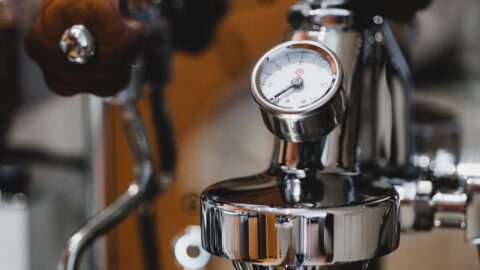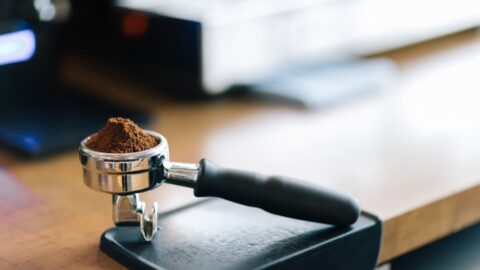

You pull a shot. The scale hits 38 grams in 27 seconds. The machine hums, the pressure gauge settles at 9 bars, and you flip the portafilter with a confident flick of the wrist. Then you take a sip. It is thin. It lacks the syrupy body you expect from a dark roast. It tastes like hot water with a faint, bitter aftertaste. You grind finer, pull another shot, and get the same watery result. You grind even finer, and now the shot runs for 45 seconds, but the cup still tastes thin and hollow. This is the most frustrating loop in home espresso, and it happens because you are chasing time instead of mass.
When your espresso tastes watery, the problem is almost never the grind size alone. The problem is your yield-to-dose ratio. You are likely pulling a 1:2 ratio (36 grams in, 72 grams out) on a bean that is not built for it, or you are using a dose that is too low for your basket’s physical limits. The fix is not to grind finer until the water chokes. The fix is to change the ratio you pull, or change the dose you use, to match the bean’s extraction potential.
The 1:2 Ratio Trap
Specialty coffee culture has spent the last decade preaching the 1:2 ratio. Put 18 grams in, pull 36 grams out. It is a clean, easy number. It is also a terrible starting point for many modern, high-scoring beans. When you pull a 1:2 ratio on a light roast, you are forcing the water to extract a massive amount of soluble solids from a small amount of coffee. The water gets saturated with bitter compounds before it has a chance to extract the delicate sugars and acids that provide body and sweetness. The result is a thin, astringent cup that tastes watery because it lacks the viscous mouthfeel of properly extracted sugars.
When your espresso is watery, it is often because you are over-extracting the bitter compounds while under-extracting the body-building sugars. The water passes through the puck, dissolving the harsh alkaloids and phenols first, and never gets the chance to pull the heavier, syrupy compounds that give espresso its weight. The solution is to pull a shorter shot. Try a 1:1.5 ratio. Put 18 grams in, pull 27 grams out. You will likely find the cup thickens immediately, the bitterness drops, and the flavor clarifies. This is not a hack; it is basic extraction science. A shorter yield concentrates the soluble solids that matter, leaving the bitter tail behind.
When Your Espresso Is Watery: The Basket Problem
There is a physical limit to how much coffee a standard portafilter basket can hold. If you are using a 14-gram basket, and you try to pull a 1:2 ratio, you are limited to 28 grams of liquid max. But if you grind fine enough to get 9 bars of pressure with only 14 grams of coffee, the water is likely channeling. It finds the path of least resistance, bypassing half the puck, and extracting only the most soluble compounds. The rest of the coffee sits there, unextracted. The result is a cup that tastes watery and sour because you are not actually extracting the full spectrum of the bean.
If your espresso tastes watery, check your basket size. If you are using a single-wall basket designed for 14 grams, you are fighting physics. Single-wall baskets have a single, large exit hole. They require a very fine grind to create resistance. If your grinder cannot produce a fine enough grind to stop channeling at 14 grams, your shots will always be thin. The fix is to upgrade to a dual-wall basket, or better yet, a pressurized basket if you are just starting out. These baskets have a tiny exit hole that forces the water through the coffee at high pressure, creating crema and body even if your grind is slightly off. It is not the ideal for a serious home barista, but it solves the watery problem instantly.
For a more permanent solution, upgrade to an 18-gram or 20-gram basket. These baskets have multiple exit holes and a wider distribution screen. They allow you to use a coarser grind (which reduces channeling) while still maintaining enough resistance to build pressure. With more coffee in the basket, you have more surface area for the water to interact with. This increases the total dissolved solids in the cup, thickening the body and masking the watery taste. If your espresso is watery, it is often because you are trying to fit too much extraction into too small a puck.
Dose, Yield, and the Hidden Variable of Tamping
You cannot change your yield without changing your dose, and you cannot change your dose without changing your tamp. Tamping is the final mechanical step before extraction begins. If you tamp unevenly, or with too little pressure, the water will channel. Channeling is the silent killer of body. It creates fast lanes through the puck where water rushes through unimpeded, extracting only the most soluble compounds and leaving the rest behind. The cup tastes watery because you are not extracting the full potential of the coffee.
When your espresso is watery, check your tamp. A level tamp is more important than a heavy one. 30 pounds of pressure is the industry standard, but consistency matters more. If your tamp is uneven, the water will find the path of least resistance, channeling through the soft side and leaving the hard side under-extracted. The result is a thin, watery cup with a bitter aftertaste. Use a distribution tool before you tamp. A WDT (Weiss Distribution Technique) tool breaks up clumps and ensures a uniform bed of coffee. This allows the water to flow evenly through the entire puck, extracting the full spectrum of flavors and creating a thick, syrupy body.
If you are still getting watery shots after fixing your tamp, try increasing your dose. Move from 18 grams to 20 grams. Keep the yield the same (e.g., 36 grams out). This increases the coffee-to-water ratio, forcing the water to extract more solids to reach the same final mass. The result is a thicker, more concentrated cup. This is the single most effective way to fix a watery espresso without changing your grind or your machine. It is a simple math problem: more coffee, same water, thicker cup.
Water Quality and the Watery Taste
Water makes up 98% of your espresso. If your water is too soft, it will extract too quickly, pulling out harsh, thin compounds and leaving the body behind. If your water is too hard, it will extract too slowly, pulling out bitter, astringent compounds and masking the sweetness. The result is a cup that tastes watery because it lacks the balanced mineral content needed to extract the full spectrum of flavors. Hard water extracts bitter compounds; soft water extracts thin compounds. The sweet spot is a Total Dissolved Solids (TDS) level of 75-150 ppm, with a balanced calcium-to-magnesium ratio.
If your espresso tastes watery, test your water. Use a TDS meter to measure the mineral content. If your TDS is below 50 ppm, your water is too soft. It will extract quickly and pull out thin, acidic compounds. If your TDS is above 200 ppm, your water is too hard. It will extract slowly and pull out bitter, astringent compounds. The fix is to use a water filter that balances the mineral content. Third Wave Water packets are a popular choice for home baristas. They provide a consistent, balanced mineral profile that extracts the full spectrum of flavors, creating a thick, balanced cup. If your espresso is watery, it is often because your water is not doing its job.
When Your Espresso Is Foamy: The Crema Deception
Thick, tiger-striped crema is the most deceptive visual cue in home espresso. It looks like a sign of a perfect shot, but it often masks a thin, watery cup. Crema is made of carbon dioxide, oils, and soluble solids. If your crema is thick and brown, it is likely made of over-extracted, bitter compounds. The color and texture of your crema tell you more about the extraction than the taste of the cup.
If your espresso is foamy, it is likely because you are over-extracting the bitter compounds. The water is pulling out the heavy, resinous compounds that create a thick, foamy head, but leaving the body-building sugars behind. The result is a cup that tastes watery and bitter, with a thick, foamy crema that masks the thinness. The fix is to pull a shorter shot, as discussed above. A shorter yield reduces the extraction of bitter compounds, thinning the crema and thickening the cup. It is a counter-intuitive result, but it is the truth of extraction science.
FAQ
Why is my espresso watery even when I grind fine?
If you grind fine enough to stop the flow, but the cup still tastes thin, you are likely channeling. Use a WDT tool to distribute the coffee evenly before tamping.
Why is my espresso foamy but tastes thin?
Foamy crema is often a sign of over-extraction. Pull a shorter shot (e.g., 1:1.5 ratio) to reduce the extraction of bitter compounds and thicken the cup.
Why is my espresso sour?
Sourness is a sign of under-extraction. The water is not pulling enough soluble solids from the coffee. Fix this by grinding finer, increasing the brew time, or using a higher dose. A 1:2 ratio on a light roast often leads to sourness; try a 1:1.5 ratio instead.
Why is my espresso bitter?
Bitterness is a sign of over-extraction. The water is pulling out too many bitter compounds from the coffee.
Sources & Further Reading
- The Coffee Extraction Spectrum — Specialty Coffee Association
- Espresso Brewing: A Practical Guide — Coffee Chemistry
- Water for Coffee: Guidelines for Brewing — Specialty Coffee Association
Photo by Adi Goldstein on Unsplash.