Most home baristas assume that pressure profiling on a heat-exchange machine is a luxury reserved for the latest prosumer gear, and that dark roasts are simply too fragile to handle a ramp. The reality is that a properly timed ramp curve on a heat-exchange machine does not break a dark roast. It saves it by neutralizing the bitter compounds that standard 9-bar pressure forces into the cup. When you control the pressure curve, you control the extraction gradient, turning a harsh, ashy shot into a syrupy, balanced one without needing a $3,000 machine.
Pressure profiling on a heat-exchange machine is not about fancy software or digital displays. It is about understanding how the machine’s single boiler handles steam and brew water, and how that thermal reality interacts with the physical structure of a dark roast. A heat-exchange machine has one boiler that simultaneously heats water for brewing and steam for texturing milk. To brew, you run cold water through the boiler, which cools the water to a usable temperature. This creates a specific thermal environment that, when paired with a pressure ramp, allows you to extract the best parts of a dark roast while leaving the bitter, astringent compounds behind.
The Heat-Exchange Machine’s Hidden Pressure
Understanding pressure profiling on a heat-exchange machine starts with the machine itself. A heat-exchange machine, such as the classic La Marzocco Linea or the Rocket Appartamento, uses a single boiler to heat water for both brewing and steaming. The boiler is kept at steam temperature, usually around 125°C (257°F). To brew, you open the brew valve, which forces cold water from the mains into the boiler. This cold water travels through a copper tube (the heat exchanger) submerged in the boiling water, heating up to a brewable temperature before hitting the puck.
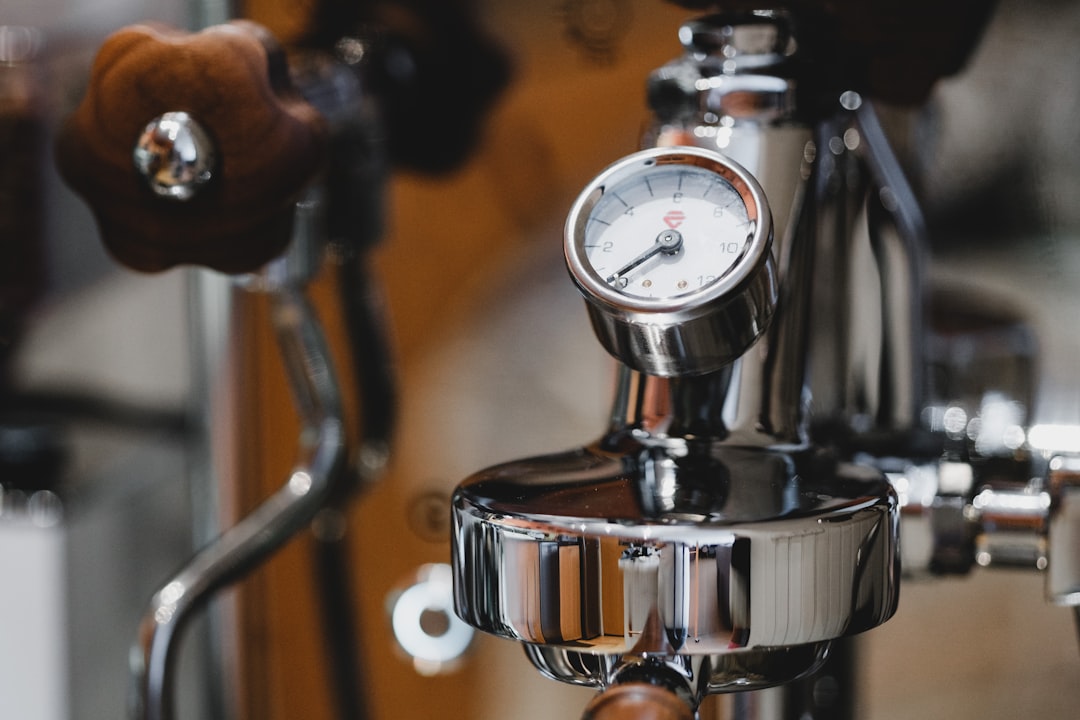
This process creates a unique pressure dynamic. Because the boiler is under constant steam pressure, the brew pressure is not solely determined by the pump. It is a combination of the pump’s output and the boiler’s steam pressure. When you pull a shot, the pressure you see on the gauge is the sum of these two forces. This means that even a basic heat-exchange machine has the mechanical capability for pressure profiling. You do not need a flow-control valve or a programmable pump to manipulate the pressure curve. You just need to understand how to use the machine’s inherent steam pressure to your advantage.
The key to pressure profiling on a heat-exchange machine is the ramp curve. A ramp curve is the shape of the pressure applied to the coffee puck over time. A standard shot applies full pressure (usually 9 bars) from the very first drop of water. A ramped shot starts at a lower pressure (often 3 to 5 bars) and gradually increases to 9 bars over the first 5 to 10 seconds. This ramp allows the coffee bed to expand and saturate evenly before the full force of the water hits it. For a dark roast, this is critical because dark roasts are more porous and brittle than light roasts. They collapse under high pressure, leading to channeling and a harsh, bitter extraction.
Why Dark Roasts Collapse Under Standard Pressure
Dark roasts are fundamentally different from light roasts in their physical structure. During the roasting process, the bean’s cellular structure expands and weakens. The oils migrate to the surface, and the bean becomes more brittle. When you apply full 9-bar pressure to a dark roast from the very beginning, the water forces its way through the weakest points in the puck. This is called channeling, and it is the primary cause of bitter, ashy, and astringent shots.
Channeling happens because the water finds the path of least resistance. In a dark roast, the path of least resistance is often through the cracks and fissures on the bean’s surface. When water flows through these channels, it extracts the bitter compounds (phenols and long-chain sugars) much faster than it extracts the desirable sweetness and acidity. The result is a shot that tastes burnt, harsh, and unbalanced.
Pressure profiling on a heat-exchange machine solves this by starting with a low-pressure pre-infusion. By starting at 3 to 5 bars, you allow the water to slowly saturate the coffee bed without forcing it through the channels. This gives the coffee time to expand and seal itself, creating a more uniform extraction path. When you then ramp up to 9 bars, the water flows through a denser, more evenly saturated puck, extracting the desirable compounds without pulling the bitter ones. This is why pressure profiling on a heat-exchange machine is so effective for dark roasts.
How to Execute a Ramp Curve on a Heat-Exchange Machine
Executing a ramp curve on a heat-exchange machine requires a specific workflow. The most common method is to use the machine’s steam pressure to control the initial brew pressure. Here is a step-by-step guide to pulling a ramped shot on a heat-exchange machine:
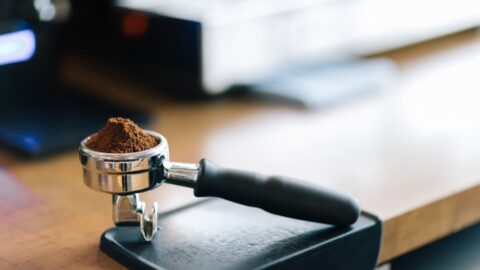
- Prepare the puck: Dose your grinder with 18 grams of dark roast coffee. Distribute the grounds evenly using a WDT tool to break up clumps. Tamp firmly and evenly to create a flat, dense puck.
- Pre-heat the portafilter: Insert the portafilter into the group head and lock it in place. Run a blank shot (without coffee) for 10 seconds to heat the portafilter and group head. This ensures stable temperature during the actual brew.
- Start the brew: Engage the brew lever or button. On a heat-exchange machine, this will immediately start the pump. However, because the boiler is under steam pressure, the initial pressure will be lower than 9 bars. This is your pre-infusion phase. Let the water flow at this lower pressure for 5 to 7 seconds.
- Ramp up the pressure: After the initial 5 to 7 seconds, gradually open the brew lever or button further. This increases the flow from the pump, which in turn increases the pressure on the puck. Aim to reach 9 bars of pressure by the 10-second mark.
- Monitor the extraction: Watch the flow rate and the color of the espresso. The espresso should start as a dark, syrupy liquid and gradually lighten in color. Stop the shot when you reach your target yield (usually 36 grams of liquid espresso for an 18-gram dose).
This method works because it leverages the machine’s inherent steam pressure to create a natural ramp. You do not need to manually adjust the pump or use a flow-control valve. The machine does the work for you. The key is to be patient during the pre-infusion phase. Do not rush to open the lever fully. Let the water slowly saturate the puck before applying full pressure.
When Pressure Profiling Fails
Pressure profiling on a heat-exchange machine is not a magic bullet. It does not fix a bad grind, a dirty machine, or a poorly designed basket. If your grind is too coarse, a ramp will not save the shot. If your machine is not clean, the ramp will simply extract more of the dirty, stale compounds. If your basket is poorly designed, the ramp will not prevent channeling.
Furthermore, pressure profiling on a heat-exchange machine requires a certain level of skill and practice. It is not as straightforward as pulling a standard shot. You need to learn how to read the pressure gauge, how to control the flow rate, and how to adjust your grind based on the results. This takes time and experimentation. Do not expect to pull a perfect ramped shot on your first try.
Finally, pressure profiling on a heat-exchange machine is not always necessary. If you are brewing a light roast, a standard 9-bar shot may be the best approach. Light roasts are denser and more resistant to channeling, so they can handle full pressure from the start. Pressure profiling is most beneficial for dark roasts, which are more porous and brittle. Use it as a tool in your toolkit, not as a replacement for good fundamentals.
The Real Value of a Ramp Curve
Pressure profiling on a heat-exchange machine is not about showing off. It is about extracting the best possible flavor from your coffee. By controlling the pressure curve, you can neutralize the bitter compounds that standard pressure forces into the cup. This allows you to pull a cleaner, sweeter, and more balanced shot from a dark roast. It is a simple technique that requires no expensive upgrades, just a willingness to experiment and learn.
If you are serious about espresso, you should master pressure profiling on a heat-exchange machine. It will change the way you brew, and it will change the way you taste coffee. Start with a dark roast, dial in your grind, and experiment with different ramp curves. You will be surprised at what you can extract from a bean that you previously thought was un-brewable.
Frequently Asked Questions
Do I need a flow-control valve to pressure profile on a heat-exchange machine?
No. A flow-control valve is helpful, but not required. You can achieve a ramp curve by manually controlling the brew lever or button, using the machine’s steam pressure to create the initial low-pressure phase.
What is the ideal ramp curve for a dark roast?
A common starting point is 5 bars for the first 7 seconds, then ramping to 9 bars by the 10-second mark. Adjust based on your specific bean and machine.
Can I use pressure profiling on a light roast?
Yes, but it is less critical. Light roasts are denser and more resistant to channeling, so they often extract well with a standard 9-bar shot. Pressure profiling can still be used to highlight specific flavor notes.
How do I know if my dark roast is channeling?
Look for a fast, uneven flow rate, a dark, syrupy start followed by a thin, watery end, and a harsh, bitter taste. These are all signs of channeling.
Is pressure profiling on a heat-exchange machine difficult to learn?
It requires practice, but it is not inherently difficult. Keep notes on your results to track your progress.
Sources & Further Reading
Photo by Evan Brorby on Unsplash.