You pull a shot. It runs fast. You grind finer. It runs slower, but it tastes sharp and sour. You grind finer again, and now the shot is bitter and syrupy. You grind finer a third time, and the machine starts making a grinding noise that sounds like it is about to give up. You are stuck in a feedback loop, adjusting a variable that is moving too fast for your palate to track, and you have no idea if the coffee is actually bad or if your machine is just behaving badly.
Dialing in a new bean is not a guessing game. It is a convergence protocol. The 12-shot protocol forces you to isolate the variables, track the data, and find the exact point where extraction yield and dissolved solids concentration balance out. It takes twelve shots, about forty minutes, and a notebook. The result is a recipe you can trust, a baseline that lets you make micro-adjustments instead of wild guesses.
Why Guessing Fails
Most home baristas dial in by pulling one shot, tasting it, and adjusting the grind. If it is sour, grind finer. If it is bitter, grind coarser. This method fails because espresso extraction is non-linear. A single click on your grinder might shift the extraction yield by 2%, but it can shift the dissolved solids concentration by 15%. You cannot taste a 2% shift in yield, but you can taste the 15% shift in concentration. So you keep grinding finer, chasing a flavor that is actually moving away from what you want.
The 12-shot protocol solves this by mapping the entire flavor curve. You pull six shots at one dose and grind setting, then six shots at a different dose and grind setting. You do not adjust the grind between shots. You do not change the dose between shots. You only change the dose and grind once, halfway through the twelve shots. This gives you two distinct data sets, each with six data points, that you can compare side by side.
As Matt Perger explains in his work on extraction dynamics, espresso is a balance between how much you pull out (extraction yield) and how much is actually in the cup (concentration). Dialing in by taste alone confuses these two variables. The 12-shot protocol separates them. The Science of Espresso Extraction by Perfect Daily Grind breaks down the exact chemistry of why concentration and yield behave differently, and why a protocol that tracks both is the only way to truly understand what your machine is doing.
The Setup
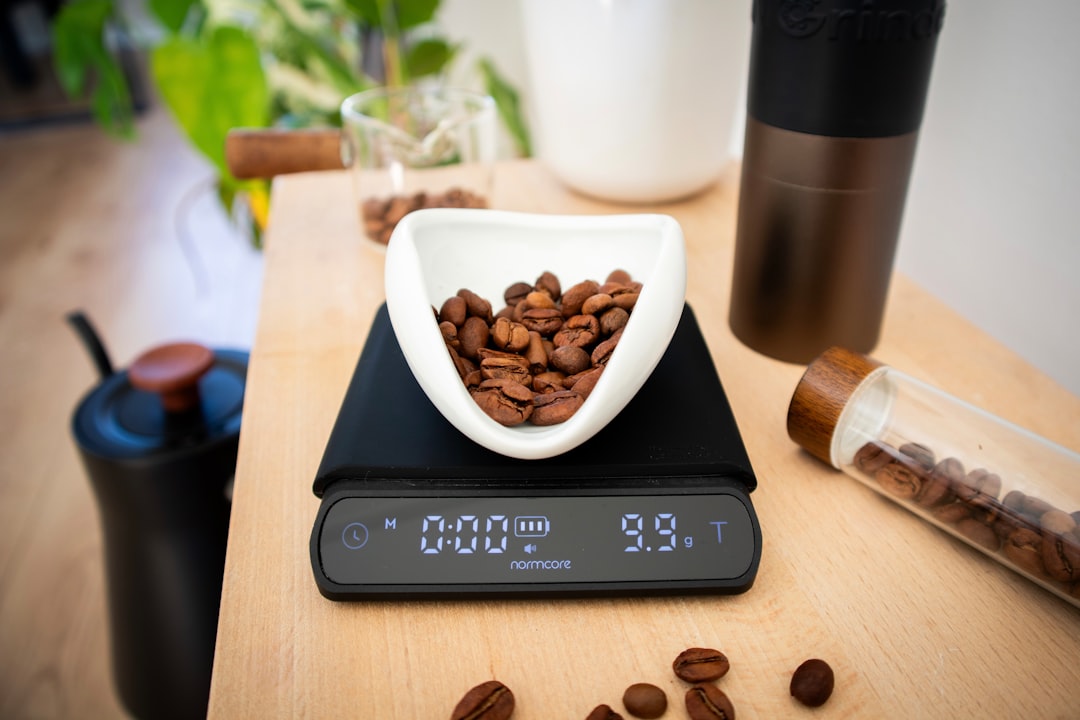
You need a scale that measures to 0.1 grams, a timer, and a notebook. Do not use the machine’s built-in timer. Do not use the scale’s auto-tare function while the shot is running. You need to measure the output mass independently. You also need a clean portafilter and a clean group head. If your machine has not been backflushed in the last week, do it now. You cannot dial in a new bean on a machine that is pulling shots through old, compacted coffee oils.
Start with a standard dose. For a double basket, that is 18 grams. Set your grinder to a medium-fine setting. Do not try to hit the ‘perfect’ setting on the first shot. The goal is to get twelve shots on the table, not to pull a perfect shot on the first try. If the first shot runs in 15 seconds, that is fine. You will adjust the grind for the second half of the protocol.
Phase One: The Low Dose
Phase One consists of six shots. You dose 18 grams of coffee into the portafilter. You pull each shot for 25 seconds of contact time, measuring the output mass on the scale. You record the input dose, the output mass, the contact time, and your taste notes for each shot. Do not adjust the grind between shots. Do not adjust the dose between shots. If the first shot runs in 20 seconds, pull the second shot for 20 seconds. Let the machine do what it does.
Record the taste. Is it sour? Bitter? Watery? Syrupy? Thin? Thick? You are mapping the flavor curve of an 18-gram dose. You are looking for the point where the flavors start to shift from sour to bitter. That shift is your extraction yield moving from under-extracted to over-extracted. The output mass at that shift is your target range for Phase One.
By the sixth shot, you should have a clear picture of what an 18-gram dose looks like across a range of grind settings. You might find that shots 1 through 3 taste sharp and acidic, shot 4 tastes balanced, and shots 5 and 6 taste bitter and astringent. That is your data. Write it down. Do not throw it away.
Phase Two: The High Dose
Phase Two consists of six shots. You increase the dose to 20 grams. You reset the grind to the exact same setting you used for Phase One. You let the machine pull the shots, and you record what happens.
Because you increased the dose, the shots will run slower. The contact time will increase. The output mass will likely be higher. The flavor profile will shift. You are looking for the same data points: where does the flavor shift from sour to bitter? Where does the concentration become too high? Where does the extraction yield drop off?
By the twelfth shot, you have twelve data points. You have two distinct flavor curves, each with six data points. You can compare them side by side. You can see how increasing the dose shifts the flavor curve. You can see how the grind setting affects the extraction yield. You can see how the concentration changes. You have a complete picture of what this bean does at this grind setting.
Finding the Convergence Point
Now you look at your data. You are looking for the convergence point, the exact shot where extraction yield and dissolved solids concentration balance out. This is the shot that tastes balanced, sweet, and complex. It is the shot that tastes the best.
If Phase One shot 4 tastes balanced, and Phase Two shot 4 tastes balanced, you have found your convergence point. If Phase One shot 4 tastes sharp, and Phase Two shot 4 tastes bitter, your grind is too fine. Adjust the grind by one click, pull two more shots, and repeat the protocol until you find the convergence point.
This is not a theoretical exercise. This is the exact method used by competition baristas to dial in a new bean under pressure. It takes time, but it saves you from pulling hundreds of shots over weeks, trying to guess what the coffee wants. The 12-shot protocol gives you the answer in forty minutes.
When the Protocol Fails
The 12-shot protocol assumes your machine is stable. If your machine’s temperature fluctuates by more than 2°C, the protocol will give you noisy data. If your grinder’s burrs are worn, the protocol will give you inconsistent particle distribution. If your basket is damaged, the protocol will give you channeling. Before you run the protocol, check your machine. Check your grinder. Check your basket. If the machine is broken, no amount of dialing in will fix it.
Additionally, the protocol assumes you are using a fresh bean. If the bean was roasted more than four weeks ago, the protocol will give you stale data. CO2 degassing changes the extraction dynamics, and old beans extract differently than fresh beans. Use a bean that was roasted within the last two weeks. If you must use an older bean, adjust your protocol to account for the increased CO2, but do not expect the same results.
FAQ
How long does the 12-shot protocol take? It takes about 40 minutes, including the time to clean the portafilter and grind the coffee between phases. It is not a fast process, but it is the fastest way to get a reliable baseline.
Do I need a refractometer? No. The 12-shot protocol is designed for home baristas without a refractometer. You use your palate to map the flavor curve, not a TDS reading. If you have a refractometer, you can use it to verify your results, but it is not required.
What if I cannot find a balanced shot? That means the bean is inherently unbalanced, or your machine is incapable of pulling a balanced shot. Adjust the grind by two clicks and run the protocol again. If you still cannot find a balanced shot, the bean may not be suitable for your machine. Try a different bean.
Can I use this protocol for single shots? Yes. Adjust the dose to 9 grams for Phase One and 10 grams for Phase Two. The principle remains the same. You are mapping the flavor curve across a range of grind settings.
Sources & Further Reading
- The Science of Espresso Extraction — Perfect Daily Grind
- Everything but Espresso — Roaster's Source
- The World Barista Championships: Official Rules and Guidelines — World Barista Championships
- Espresso Extraction: Understanding Yield and Concentration — Specialty Coffee Association
Photo by User_Pascal on Unsplash.