You are standing at the counter with a fresh bag of Ethiopian Yirgacheffe, a Hario V60 dripper, and a standard kitchen kettle that looks like it belongs in a hotel room. You pour. The water spreads outward in a chaotic, uncontrolled sheet, hitting the filter paper with uneven force. The coffee bed churns, creating a muddy slurry that drips through too fast, then stalls, then drips again. The result is a cup that tastes thin and sour, lacking the clarity you paid for. You blame the ratio. You blame the grind. You blame the bean. The real problem is the shape of the spout.
The gooseneck kettle is not a luxury accessory. It is the single most important variable in pour-over brewing, far outweighing the brew ratio in its ability to control extraction. While home brewers obsess over hitting a 1:16 ratio or a 200-degree water temperature, they ignore the mechanical reality of how water interacts with coffee grounds. A standard spout delivers water as a wide, turbulent stream. A gooseneck spout delivers it as a focused, laminar flow. This difference in fluid dynamics dictates whether your coffee tastes like bright fruit or muddy sludge.
The Physics of a Gooseneck Spout
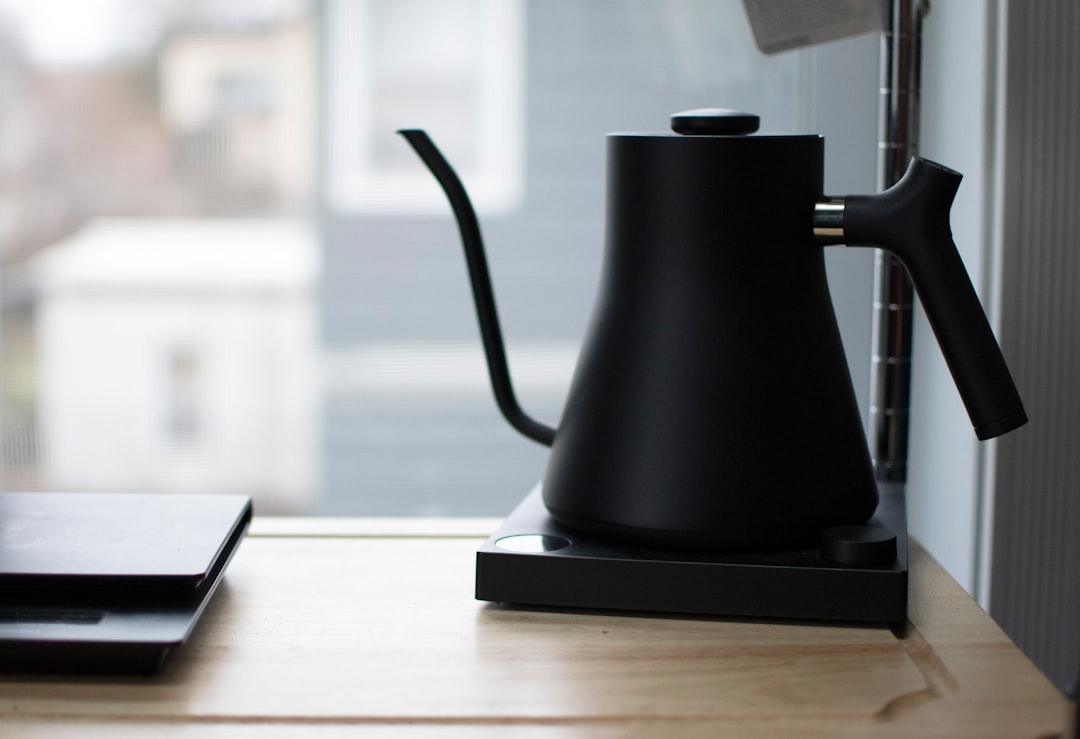
Gooseneck kettles get their name from the long, curved spout that resembles a goose’s neck. But the shape is not decorative. It is a fluid dynamics tool designed to control flow rate and direction. When you tilt a standard kettle, water rushes out in a wide, uncontrolled arc. The flow rate is dictated by gravity and the angle of the tilt, not by your hand. This makes it nearly impossible to maintain a consistent flow rate across the coffee bed.
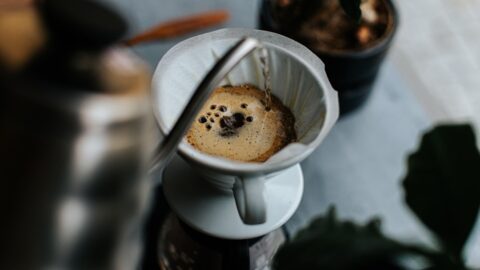
A gooseneck kettle changes this. The narrow opening at the tip forces the water into a thin, focused stream. This stream can be manipulated with millimeter precision. You can draw small circles, pour in a straight line, or stop the flow instantly by leveling the kettle. This level of control allows you to manage the contact time between water and coffee, which is the primary driver of extraction.
Consider the difference in a practical setting. With a standard kettle, a slight tilt sends a heavy gush of water onto one side of the filter. This creates a channel, where water bypasses the coffee entirely and flows straight through the paper. The result is under-extraction on the sides and over-extraction in the center. With a gooseneck kettle, you can pour a slow, steady stream that saturates the entire coffee bed evenly. The water is forced to interact with the grounds, not bypass them.
This is not a matter of opinion. It is a matter of physics. The Specialty Coffee Association (SCA) recognizes flow rate as a critical variable in brewing. Their standards for pour-over brewing explicitly state that consistent flow rate is necessary for even extraction. A gooseneck kettle is the only affordable, home-brewing tool that allows you to achieve this consistency.
Why Ratio Is a Secondary Variable
Most home brewers are taught to obsess over the brew ratio. They measure 20 grams of coffee and 320 grams of water, believing that hitting the 1:16 ratio is the key to a perfect cup. This is a fundamental misunderstanding of how extraction works. The ratio determines the concentration of dissolved solids in the final cup, but it does not determine the quality of the extraction. You can have a perfect 1:16 ratio and still pull a sour, weak cup if your flow rate is inconsistent.
Think of the ratio as the volume of water you are using, and the flow rate as how you deliver it. If you pour too fast, you under-extract the soluble compounds, regardless of your ratio. The gooseneck kettle allows you to manipulate the flow rate to match the grind size and the bean’s roast level. A light roast requires a slower, more controlled pour to allow water to penetrate the dense cell structure. A dark roast requires a faster pour to avoid extracting harsh, ashy compounds.
When you use a standard kettle, you are forced to pour quickly to avoid flooding the filter. This fast flow rate under-extracts the coffee, leaving you with a sour cup. To compensate, you grind finer, which increases the surface area and slows the flow rate. But this often leads to channeling, where water finds the path of least resistance and bypasses the majority of the grounds. The result is a cup that is both sour and bitter, a muddy mix of under-extracted and over-extracted compounds.
A gooseneck kettle breaks this cycle. By slowing the pour, you allow the water to fully saturate the coffee bed. This increases the contact time and allows the soluble compounds to dissolve evenly. The result is a cup that is bright, sweet, and clear, with no muddy or bitter notes. The ratio is still important, but it is secondary to the flow rate. You can adjust the ratio to change the concentration, but you cannot change the quality of the extraction without changing the flow rate.
Matching Kettle to Dripper
Not all gooseneck kettles are created equal. The best kettle for your setup depends on the dripper you use. A Hario V60, with its aggressive spiral ribs and large hole at the bottom, requires a kettle with a slow, controlled pour. A Kalita Wave, with its flat bottom and smaller holes, requires a kettle that can deliver a steady, even stream. A Chemex, with its thick filter paper, requires a kettle with a high flow rate to prevent the brew from stalling.
For the V60, look for a kettle with a narrow spout and a slow flow rate. This allows you to pour slowly and steadily, ensuring that the water interacts with the coffee grounds and not the filter paper. The Fellow Stagg EKG is a popular choice for this reason. Its narrow spout allows for extreme precision, and its temperature control ensures that the water is at the exact temperature you need.
For the Kalita Wave, look for a kettle with a slightly wider spout and a moderate flow rate. This allows you to pour quickly enough to prevent the brew from stalling, but slowly enough to ensure even saturation. The Bonavita Variable Temperature Gooseneck Kettle is a great option for this. It has a wider spout than the Fellow Stagg, but still offers excellent control.
For the Chemex, look for a kettle with a wider spout and a fast flow rate. The Yeti Pour-Over Kettle is a great option for this. It has a wide spout that allows for a fast, steady stream, and its large capacity means you can brew multiple cups at once.
The key is to match the kettle to the dripper. A slow-pouring kettle with a fast-draining dripper will result in a weak, under-extracted cup. The gooseneck kettle allows you to fine-tune the flow rate to match the dripper, ensuring that every cup is balanced and clear.
Plastic-Free Brewing
Many home brewers are concerned about plastic leaching into their coffee. This is a valid concern, as plastic can impart off-flavors and chemicals into the brew. If you are looking for a plastic-free brewing experience, there are several excellent gooseneck kettles available that are made from stainless steel or glass.
The Fellow Stagg EKG is made from stainless steel, with a glass carafe option available. This ensures that no plastic comes into contact with the water, giving you a pure, clean cup. The Bonavita Variable Temperature Gooseneck Kettle is also made from stainless steel, with a plastic handle and spout. While the handle and spout are plastic, they do not come into contact with the water, so they do not affect the flavor of the brew.
For a completely plastic-free option, look for a glass gooseneck kettle. The Hario V60 Glass Server is a great choice. It is made entirely of glass, with a stainless steel lid and spout. The only downside is that glass is fragile, so you need to handle it with care.
Regardless of the material, the gooseneck kettle is the best tool for pour-over brewing. It allows you to control the flow rate, which is the primary driver of extraction. The ratio is secondary. By matching the kettle to the dripper, you can ensure that every cup is balanced and clear. And by choosing a plastic-free option, you can ensure that no off-flavors or chemicals are leaching into your brew.
Conclusion
The gooseneck kettle is not a luxury. It is a necessity. By mastering the flow rate, you can pull a cup that is bright, sweet, and clear, with no muddy or bitter notes.
If you are serious about pour-over brewing, invest in a gooseneck kettle. It will change the way you brew, and it will change the way you taste coffee. The difference between a standard kettle and a gooseneck kettle is not just in the shape of the spout. It is in the quality of the cup.
Start with a slow, controlled pour. Match the kettle to the dripper. And taste the difference. The best pour-over kettle is not the one with the most features. It is the one that allows you to control the flow rate. And that is the gooseneck.
Sources & Further Reading
- Specialty Coffee Association Home Brewing Guide — Specialty Coffee Association
- The Coffee Roaster's Companion — Scott Rao
Photo by Paul Esch-Laurent on Unsplash.