Espresso demands a grind distribution where 90 percent of the particles land within a 50-micron window. Get that wrong, and you get channeling, sourness, and a cup that tastes like burnt almonds even when the recipe is perfect. The most common mistake home brewers make when buying a grinder is assuming that ‘flat burrs are sharper’ means they will produce a better espresso shot. That assumption is why so many home setups fail to pull a clean shot, no matter how much they tweak the dose or the tamp pressure.
The truth is that the shape of the burrs dictates the particle distribution, and that distribution determines whether your espresso holds together or falls apart. Conical burrs produce a wider, more forgiving particle distribution that actually works better for home espresso machines. Flat burrs produce a narrower, more uniform distribution that sounds great on paper but requires a level of machine precision and dial-in skill that most home setups cannot sustain.
The Particle Distribution Problem
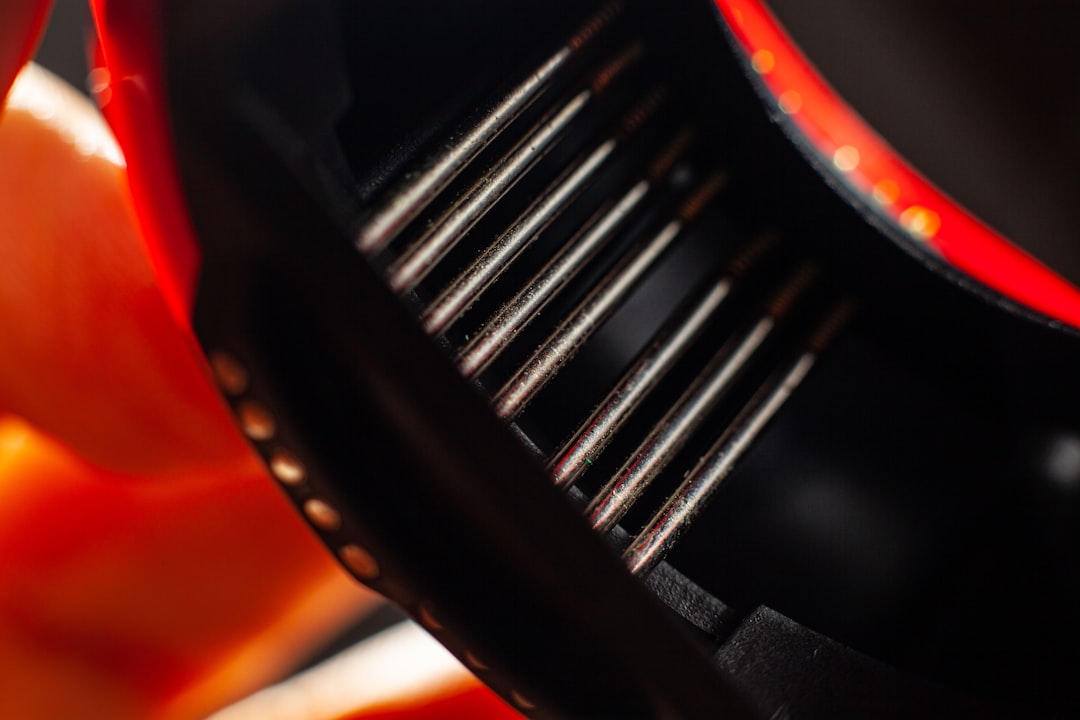
When coffee beans pass between two burrs, they fracture. How they fracture depends entirely on the geometry of those burrs. Flat burrs operate like a guillotine, shearing the bean across its entire width simultaneously. This creates a very narrow particle size distribution, meaning most particles are exactly the same size. Conical burrs operate like a cone grinding against a ring, crushing the bean from the center outward. This creates a wider particle size distribution, meaning you get a mix of fine, medium, and coarse particles in the same batch.
For pour-over, a narrow distribution is ideal. It creates a clean, bright cup with high clarity because the water flows through particles of roughly the same size. For espresso, a narrow distribution is a nightmare. If every particle is exactly the same size, the water finds the path of least resistance and punches through. This is channeling, and it is the single biggest reason home espresso shots taste sour and thin.
Conical burrs create a wider distribution that includes fines. Those fines are not a bug; they are the structural glue of an espresso shot. They dissolve into the water, creating the syrupy body and the golden crema that defines a good espresso. Without those fines, even a perfectly extracted espresso tastes watery and hollow. A conical burr gives you the fines you need to build body, while the larger particles provide the structure to keep the water flowing evenly.
Why Home Machines Struggle with Flat Burrs
Flat burrs are not inherently bad. They are just unforgiving. A commercial espresso machine with a multi-group head, a massive boiler, and a pressure pump that delivers a rock-steady 9 bars of pressure can handle the narrow distribution of a flat burr. The machine forces the water through the puck with enough consistency that the lack of fines does not matter.
Home machines, particularly those under $1,500, do not have that level of consistency. They suffer from pressure fluctuations, temperature swings, and uneven water distribution from the shower screen. When you pair a narrow particle distribution with an inconsistent machine, you amplify every flaw. The water punches through the few gaps between the perfectly uniform particles, creating channeling. The rest of the puck remains under-extracted. The result is a cup that is simultaneously sour and bitter.
A conical burr grinder, by contrast, builds a buffer against that inconsistency. The fines fill the gaps between the larger particles, forcing the water to slow down and interact with more coffee. This creates a more even extraction even if the machine itself is slightly inconsistent. It is the difference between a tightrope walker (flat burr) and a tightrope walker with a safety net (conical burr). The safety net does not make the walk easier, but it makes the fall survivable.
Which Grinder Actually Fits Your Setup?
If you are buying a grinder specifically for espresso, you need to look at the burr geometry first, then the build quality. The goal is not the sharpest cut. The goal is the most forgiving cut that still delivers enough fines to build body.
The Your Espresso Shot Isn’t Sour. The Grinder’s Dead Zone Is. article covers how burr alignment impacts consistency, but burr geometry is the first filter. For a home machine, a conical burr grinder like the 1Zpresso J-Max Pro or the Comandante C40 MK4 (used with an espresso adapter) will give you a wider distribution that is much easier to dial in. These grinders are manual, which means you control the speed and pressure of the grind, further smoothing out the particle distribution.
If you prefer an electric grinder, the Baratza Sette 270Wi uses a conical burr set designed specifically for espresso. It is fast, it is forgiving, and it handles the volume of a home barista perfectly. The Fellow Ode Gen 2 is a flat burr grinder, but it is designed for pour-over. Using it for espresso will require extreme precision and a high-end machine, making it a poor choice for most home setups.
Do not buy a flat burr grinder for espresso unless you are willing to spend $2,000 on the grinder and $1,500 on the machine. Even then, you will spend half your time dialing in. A conical burr grinder gives you a better chance of pulling a clean shot on your first try, and a consistent shot on your hundredth.
How to Dial In a Conical Burr Grinder
Once you have a conical burr grinder, the dialing-in process is different from flat burrs. You are not chasing a single number on the dial. You are listening to the shot. If the shot pulls too fast, move the grind finer. If it pulls too slow, move it coarser. The goal is a 25-to-30-second pull that yields a 1:2 ratio of coffee to liquid.
If the shot tastes sour, it is under-extracted. If it tastes bitter, it is over-extracted. With a conical burr, you can often fix a sour shot by slowing the pour or using a slightly finer grind, not by changing the dose. The fines in the grind will naturally slow the water down and extract more of the soluble compounds. This is why conical burrs are so forgiving for home brewers.
Remember that Extraction Yield Is Not the Real Problem. The Gradient Is.. The gradient of particle sizes in a conical burr grind creates a more even extraction across the entire puck. This is the secret to a balanced cup without needing a $5,000 machine.
FAQ
Can I use a flat burr grinder for espresso?
Yes, but it is much harder to dial in. Flat burrs require a very consistent machine and precise technique. If you are a beginner, start with a conical burr grinder.
Are conical burrs worse for pour-over?
They produce a cup with more body and less clarity than flat burrs. If you prefer a bright, tea-like cup, flat burrs are better. If you prefer a syrupy, balanced cup, conical burrs are better.
What is the best budget grinder for espresso?
The 1Zpresso J-Max Pro is widely considered the best budget manual grinder for espresso. For electric, the Baratza Sette 270Wi is the best entry-level option.
Do I need a dosing cup with a conical burr grinder?
A dosing cup helps reduce static and ensures all the coffee lands in the portafilter. It is not strictly necessary, but it helps with consistency.
Sources & Further Reading
- The Effect of Grinder Type on Espresso Extraction — Journal of Coffee Science
- The Science of Espresso: How Particle Size Distribution Affects Extraction — Journal of Coffee Science
- Espresso Extraction: The Role of Fines and Particle Distribution — Journal of Coffee Science
Photo by Ian Talmacs on Unsplash.